2026 Best Custom Reflective Vest for Work and Safety
A Custom Reflective Vest can make a worker easier to notice, but the right choice depends on the job. A road crew needs different coverage from a warehouse team working around forklifts. Fit, fabric, reflective placement, and storage all matter. Small details count.
Dr. John Howard, director of the National Institute for Occupational Safety and Health, has emphasized that personal protective equipment belongs within a broader prevention strategy. A vest supports hazard controls; it does not replace them. That distinction matters when selecting workwear for changing light, weather, and traffic conditions.
This 2026 guide compares Custom Reflective Vest options for practical workplace use. It considers visibility features, breathable materials, secure closures, pocket placement, and customization choices such as logos and worker names. A vest that rides up over a jacket, or loses reflective performance after repeated washing, may not serve its purpose well. Check sizing with the actual layers workers will wear. Review care instructions, too.
There is no single best vest for every crew. A lightweight mesh design may feel comfortable in summer, while a more substantial garment may suit cooler shifts. Buyers should also confirm that the garment’s stated performance and markings match their workplace requirements. Details vary by product. Some listings are less clear than they should be.
The aim is a considered shortlist, not a promise that one vest solves every safety problem. Choose for the task, test the fit, and reassess when conditions change.
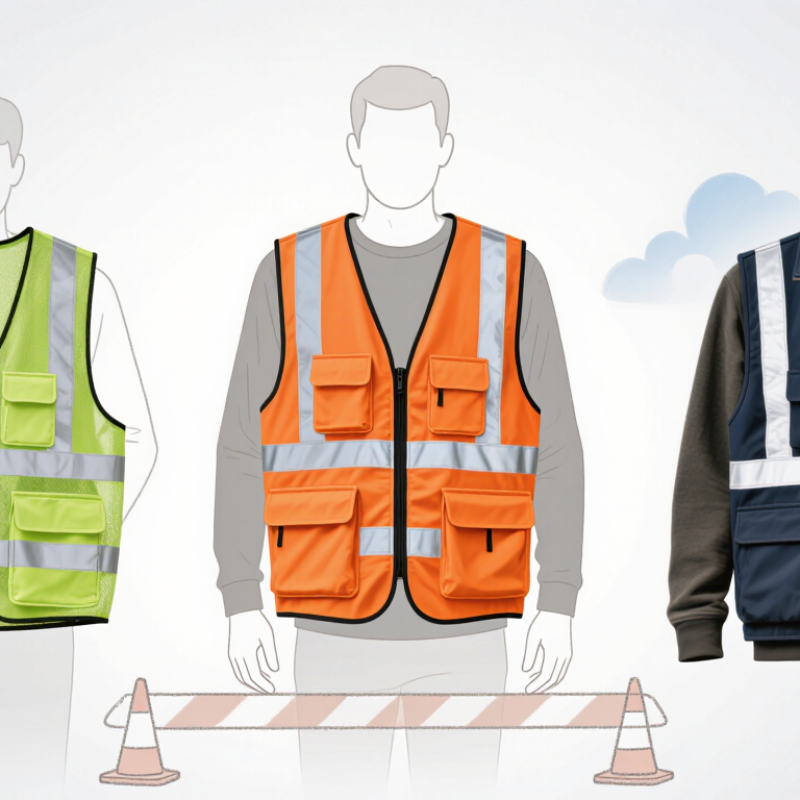
Assess 2026 Worksite Hazards and Visibility Needs Before Choosing a Vest
Choosing a reflective vest starts with the worksite, not the color chart. Walk the route workers take and note moving vehicles, reversing equipment, blind corners, and shadowed loading bays. Light changes everything. A vest that stands out at noon may blend into dusk, rain, or headlight glare. Consider the wearer’s task, too: a person facing traffic needs visible front and back panels, while a worker reaching overhead may need reflective material across the shoulders. Check whether coats, harnesses, or tool belts will cover key areas. Fit matters.
For a custom vest, place reflective bands where they remain visible during normal movement, and keep printed text clear of those bands. Select fabric suited to expected heat, abrasion, and repeated washing; a torn seam or faded strip can reduce visibility. Ask workers to try samples over their usual clothing and bend, reach, and turn in them. A quick visual check helps, but it does not replace site procedures or applicable safety requirements. Recheck after washing. Conditions change, and initial assumptions can be wrong; a dim corner or newly added machine may call for a different vest layout or visibility level.
Match ANSI/ISEA 107-2020 Performance Classes to Worker Exposure
Choosing a custom reflective vest starts with the worker’s exposure, not the logo or color preference. ANSI/ISEA 107-2020 organizes high-visibility apparel by garment type and performance class. Type O covers off-road work, Type R roadway work, and Type P public safety activities. The right choice depends on the worksite, vehicle speeds, background conditions, and how close workers get to moving traffic. Check the applicable standard and site requirements before ordering.
Class 1 suits lower-risk settings with clear separation from traffic. Class 2 adds visibility for workers near vehicles or in busier conditions. Class 3 provides greater visibility, including coverage of the arms and legs through compliant garments. Details matter. A vest with wide reflective bands may still be a poor match if a jacket covers them or equipment hides the front panels. Custom graphics should not reduce required visible material. In practice, sizing can be easy to overlook: test the vest over the layers workers actually wear, then check movement and coverage under work lighting. Reassess when tasks or conditions change. A clean vest helps, but dirt, wear, and damaged tape can reduce visibility. Don’t assume last year’s selection still fits this year’s work.
Class 2 Minimums: 0.50 m² Background and 0.13 m² Retroreflective Material
2026 Best Custom Reflective Vest for Work and Safety
For a Class 2 vest, the stated minimums are 0.50 m² of background material and 0.13 m² of retroreflective material. Background fabric is usually fluorescent and helps workers stand out in daylight or low-light conditions. Retroreflective strips return light toward its source, such as vehicle headlights. These areas are separate requirements; one cannot replace the other. Check the applicable standard and edition before ordering, since specifications can change.
Custom designs need careful planning. A large logo may cover bright fabric or interrupt reflective bands. Keep essential reflective sections visible across the front and back, including when the vest is fastened. Fit matters. A vest that meets area minimums on paper may ride up, wrinkle, or disappear beneath a coat during real work. That detail is easy to miss.
Ask for a size-specific layout and verify the measured material areas on the finished garment. Try it over the clothing workers will actually wear. Check visibility while standing, bending, and turning near typical work lighting. Dirt, wear, and folded fabric can reduce visibility over time, so establish a simple inspection routine. I would not judge a vest by its bright color alone; the reflective placement and everyday fit deserve equal attention.
2026 Best Custom Reflective Vest for Work and Safety — Class 2 Minimums: 0.50 m² Background and 0.13 m² Retroreflective Material | Selection Dimension | Class 2 Requirement or Guidance | What to Check When Ordering a Custom Vest |
| Background material | Minimum: 0.50 m² of compliant high-visibility background material. | Confirm the finished garment provides the required area in the selected size and configuration. |
| Retroreflective material | Minimum: 0.13 m² of compliant retroreflective material. | Check the material specification and placement on the finished vest; decorative trim should not be assumed to count. |
| High-visibility color | Common compliant background colors include fluorescent yellow-green, fluorescent orange-red, and fluorescent red. | Choose a color that stands out against the typical worksite background and confirm it is specified for high-visibility apparel. |
| Garment class | Class 2 apparel is intended for situations requiring greater visibility than Class 1 apparel. | Match the class to the worksite hazard assessment and any applicable employer, roadwork, or jurisdictional requirements. |
| Custom logos and graphics | Customization must not reduce the required visible background or retroreflective material area. | Request a layout or finished-garment specification showing that required material areas remain available after customization. |
| Fit and coverage | Fit affects how the garment sits and how much of its high-visibility material remains exposed during work. | Check the size chart, intended layering, closure style, and whether the vest stays properly positioned while moving. |
| Documentation | Verify the garment’s stated standard edition, class, and applicable type against the job requirements. | Request product labeling or documentation for the exact custom configuration, rather than relying only on a general product description. |
The area values shown are Class 2 minimums stated for this comparison. Confirm the applicable ANSI/ISEA 107 edition and workplace requirements before purchase; custom designs and garment sizes should be checked against the finished garment specification.
Class 3 Minimums: 0.80 m² Background and 0.20 m² Retroreflective Material
A Class 3 safety vest needs at least 0.80 m² of background material and 0.20 m² of retroreflective material under the stated minimums. These figures matter when choosing a custom design, not just when comparing fabric colors. A large logo may look clear on a sample but cover useful reflective areas on the finished vest. Keep reflective bands visible across the torso and shoulders, and check the completed garment rather than relying on a flat design mock-up. Small sizes need particular attention.
Fit matters too. A vest that bunches under a rain jacket, or hangs open while a worker reaches overhead, may lose visibility in practice. Ask for measurements and material-area details for each size, and confirm which safety standard the specification follows. Requirements can vary by standard and application, so do not assume these numbers apply everywhere. Test the vest in the lighting and work conditions where it will be worn. Even a careful plan can miss a blocked panel or awkward seam. Check again.
Customize Fit, Branding, Closures, and Care Without Obscuring Visibility
A custom reflective vest should fit the work, not just look right on a product sheet. Measure over the layers workers will actually wear, including a winter jacket or tool belt. The vest should stay secure when bending, reaching, and turning, without pulling across the shoulders. Too loose, and fabric may snag; too tight, and coverage can shift. Fit takes testing. Have a few workers try sample sizes during real tasks before approving a full order.
Keep reflective strips and high-visibility panels clear of logos, pockets, and added trim. Place branding on a solid area only after checking the vest from the front, back, and sides. A small logo may still interrupt a useful panel. It is an easy detail to miss. Confirm that the finished layout meets the visibility requirements for the intended job and environment; customization alone does not establish compliance.
Choose closures workers can manage with gloves. Zippers offer a snug front, while hook-and-loop tabs allow quick adjustment, though dust and lint can reduce their grip. Care matters, too. Follow the garment’s care label, use gentle washing, and avoid unapproved heat or harsh chemicals that could damage reflective material. Inspect seams, closures, and strips regularly. Replace a vest if wear, fading, or damage reduces its visibility. Even a good care routine cannot prevent every failure.
Minimum Visibility Material by ANSI/ISEA 107-2020 Performance Class
The chart compares the minimum garment areas for background material and retroreflective material in Performance Classes 1–3. Custom fit, branding, closures, and care choices should preserve the required visible materials and follow the applicable standard and workplace requirements.
Source: ANSI/ISEA 107-2020 minimum material area requirements. Areas are in square inches.
