
Huntersville, NC: (704) 992-8100     Putnam, CT: (860) 928-7911

7 Best WPC Exterior Panel Suppliers Worldwide

Choosing a Wpc Exterior Panel supplier requires more than comparing glossy catalogs. Performance depends on climate, formulation, installation, and after-sales support. This guide introduces seven established suppliers serving international construction and landscaping markets. The selection focuses on manufacturing experience, material consistency, documented testing, and practical project support.

Samples matter. A panel that looks convincing indoors may fade, warp, or stain under intense sunlight and seasonal rain. For that reason, the discussion considers water absorption, UV resistance, fire-performance information, surface texture, fastening systems, and warranty terms. These details help architects, distributors, contractors, and property owners compare suppliers with clearer expectations.

Reliable manufacturers should explain their wood-plastic composition, production controls, and recommended installation spacing. They should also provide traceable technical documents, current certifications, and responsive answers when site conditions change. A strong warranty is useful, but it cannot replace correct drainage and expansion gaps. Real projects reveal more than promotional language. Photos showing corner cuts, concealed clips, and weathered surfaces can expose practical strengths or weaknesses. Still, global availability does not guarantee equal service in every region. Lead times, minimum order quantities, local stock, and replacement-panel policies may influence the final cost. This overview aims to remain balanced, though supplier data can change and published claims deserve verification. That caution is intentional. Use the shortlist as a starting point, then request samples and project references before committing.
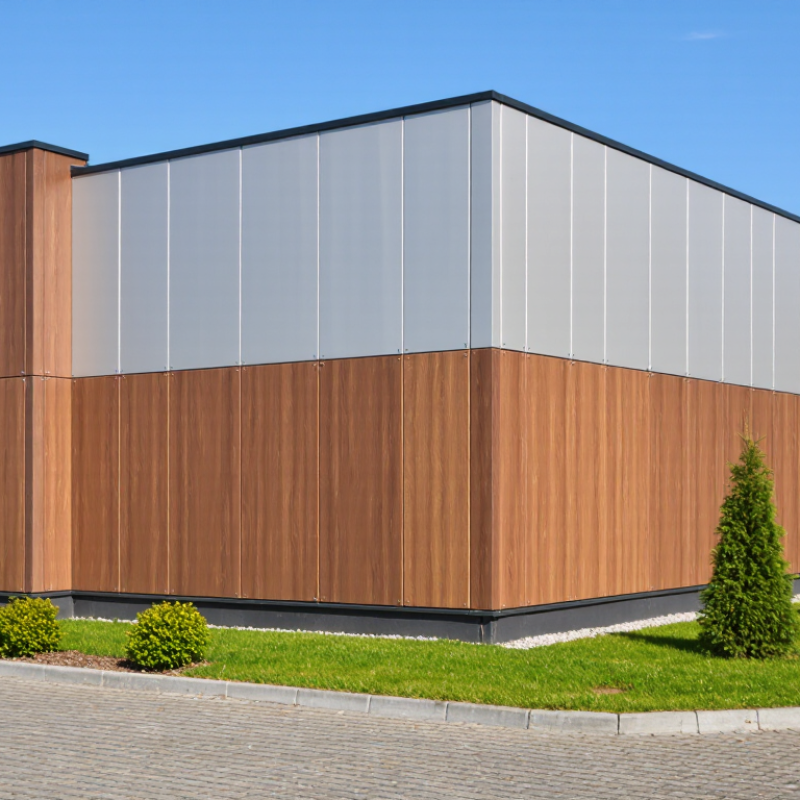
7 Best WPC Exterior Panel Suppliers Worldwide

Understanding WPC Exterior Panels and Their Main Applications

WPC exterior panels combine wood fibers with thermoplastic polymers and performance additives. This structure gives them a textured appearance with improved resistance to moisture, insects, and surface cracking. Unlike untreated timber, they need less routine coating in many outdoor environments. However, they are not maintenance-free. Dust, algae, and standing water can still affect their appearance.

These panels suit residential façades, balcony screens, garden walls, soffits, and commercial entrances. They can also create privacy partitions around terraces. I have seen panels perform well beside coastal buildings when installers allowed proper drainage and expansion gaps. Dark colors may absorb strong sunlight and become noticeably warmer. Ventilated substructures help reduce heat buildup and moisture retention.

Panel quality varies between suppliers, even when product samples look similar. Buyers should check fiber content, impact strength, UV testing, fire classification, and installation guidance. A reliable supplier should provide batch information and clear warranty conditions. I once inspected a project where attractive panels warped because the framing was uneven. The material was blamed first, but poor spacing caused much of the problem. That experience still makes me question claims based only on photographs. Proper fasteners, aligned supports, and sealed cut edges matter. Small installation details often decide whether an exterior surface remains stable for years.

How the Seven Leading Global Suppliers Were Selected

7 Best WPC Exterior Panel Suppliers Worldwide

How the Seven Leading Global Suppliers Were Selected

The seven suppliers were selected through a practical, evidence-based review. Grand View Research estimates that the global wood-plastic composites market reached USD 7.63 billion in 2023. It also forecasts a 7.3% compound annual growth rate from 2024 to 2030. This growth increases the need for dependable exterior panel production, not attractive brochures alone.

Each supplier was assessed across five areas: manufacturing capacity, material consistency, weather resistance, compliance documentation, and export experience. Production sites were reviewed for batch controls, moisture testing, and color stability records. Panels were also compared against relevant ASTM and EN 15534 testing principles. These checks matter in coastal zones, where salt exposure can reveal weak formulations quickly. Freeze-thaw performance was considered too.

Environmental evidence influenced the ranking. Suppliers providing recycled-content data, life-cycle information, or ISO 14025-based declarations received stronger consideration. The selection also examined warranties, technical drawings, installation guidance, and response times. The International Energy Agency reports that buildings account for roughly 30% of global energy demand, so durable cladding can support longer replacement cycles. That claim needs care. WPC panels do not automatically create energy savings.

No score is perfect. A supplier may offer excellent laboratory results but limited regional inventory. Another may provide strong pricing but weaker project documentation. These trade-offs were recorded rather than hidden. Site references, independent test reports, and sample panels were weighted more heavily than marketing language. Real installation feedback still remains the hardest evidence to verify.

Profiles of Seven Notable WPC Exterior Panel Suppliers

Seven notable WPC exterior panel suppliers stand out through different strengths. One focuses on façade panels for coastal buildings, using capped boards that resist salt air and moisture. Another supplies deep-textured panels for hotels, where woodgrain appearance matters beside frequent cleaning. A third serves large commercial projects with stable, measured color batches and documented fire-performance testing.

A fourth supplier specializes in lightweight panels for balcony screens and renovation work. Its systems reduce handling effort, although installers still need careful spacing around fasteners. The fifth offers custom profiles, including corner trims, ventilation parts, and concealed fixing rails. This can simplify complex façades, but unusual profiles may increase replacement costs later. A sixth supplier works closely with regional fabricators, providing installation training and sample panels for approval. That practical support often reveals surface issues before a full order is placed.

The seventh supplier emphasizes recycled content and traceable manufacturing records. Its panels suit buyers who need clearer environmental data, not just attractive claims. Across these profiles, experienced purchasers should check ultraviolet resistance, water absorption, thermal movement, warranty limits, and local technical support. A sample can look excellent indoors. Outdoor exposure may tell a different story. Independent testing remains important, because supplier literature is not always enough for demanding climates or high-rise applications. Even experienced teams sometimes underestimate color variation between production runs. That mistake deserves attention before installation.

7 Best WPC Exterior Panel Suppliers Worldwide - Profiles of Seven Notable WPC Exterior Panel Suppliers

Supplier Profile Primary Supply Region Typical Product Focus Common Material Composition Surface Options Weather-Resistance Features Customization Capability Relevant Testing or Standards Best Fit for Buyers
Supplier Profile 1 East Asia Exterior wall cladding, siding boards, and façade panels Wood flour or fiber combined with thermoplastic polymer and additives Wood grain, brushed, embossed, and matte finishes UV stabilizers, moisture resistance, and capped outer layers on selected products Color matching, board length, profile dimensions, and private-label packaging Outdoor weathering, water absorption, dimensional stability, and fire-performance testing where specified Large-volume distributors and residential façade projects
Supplier Profile 2 Western Europe Architectural façade systems and rainscreen cladding Wood-polymer composite with engineered profiles and concealed fixing compatibility Textured timber appearance, solid colors, and low-sheen finishes Low-maintenance construction, resistance to rot and insects, and improved color retention Project-specific profiles, corner elements, trims, and installation accessories Reaction-to-fire classification, slip or pull-out testing for fixings, and façade-system assessments Commercial buildings, public projects, and specification-led construction
Supplier Profile 3 North America Decking-style exterior panels, rainscreen boards, and ventilated façades Recycled polymer and wood fiber, frequently produced with co-extrusion technology Deep embossing, multi-tone finishes, and natural wood visual effects Capped surfaces, resistance to moisture, fading, splitting, and fungal decay Standard and custom lengths, matching trim components, and regional packaging formats ASTM-based weathering, water absorption, flexural performance, and flame-spread testing where applicable Detached housing, remodeling, and outdoor hospitality applications
Supplier Profile 4 Southeast Asia Cost-efficient exterior wall panels and decorative façade boards Wood fiber, PVC or polyethylene matrix, stabilizers, pigments, and processing aids Grooved, ribbed, brushed, and co-extruded decorative surfaces Water-resistant construction, anti-UV additives, and resistance to termites and decay Flexible color selection, profile tooling, panel thickness, and container-load planning Basic physical-property tests, color fastness, water absorption, and dimensional-change testing Importers, wholesalers, and price-sensitive construction projects
Supplier Profile 5 Oceania Exterior screening, coastal cladding, and residential façade systems Wood-plastic composite engineered for high solar exposure and humid environments Natural timber tones, contemporary neutrals, and anti-slip textured surfaces UV protection, salt-air suitability claims subject to testing, moisture resistance, and low maintenance Ventilated façade accessories, matching fasteners, trims, and installation guidance UV exposure, coastal-environment suitability, slip resistance, and structural-load testing as required Beachside homes, balconies, resorts, and high-sunlight locations
Supplier Profile 6 Middle East Solar-exposed façade panels, privacy screens, and exterior decorative systems High-density WPC profiles with UV and thermal-stability additives Dark and light wood tones, solid architectural colors, and linear textures Designed for heat, intense sunlight, dust exposure, and intermittent moisture Custom shade matching, ventilation gaps, screen dimensions, and façade detailing Thermal cycling, UV aging, impact resistance, fire performance, and wind-load verification when required Hotels, villas, retail developments, and hot-climate landscaping projects
Supplier Profile 7 Eastern Europe and Central Asia Insulated façade boards, decorative wall panels, and renovation cladding WPC outer layer combined with hollow or structured profiles for reduced weight Embossed grain, coated finishes, and modular panel patterns Resistance to moisture, freeze-thaw exposure, rot, and routine exterior maintenance Thermal backing options, regional color ranges, cut-to-length service, and accessory kits Freeze-thaw cycling, dimensional stability, thermal performance, water absorption, and fire testing where specified Cold-climate renovations, apartment façades, and low-maintenance residential construction

Note: Product composition, performance claims, certifications, and testing requirements vary by supplier and market. Buyers should verify current technical datasheets, test reports, installation manuals, warranty terms, and local building-code compliance before placing an order.

Comparing Product Quality, Design Options, and Technical Performance

Choosing among the world’s best WPC exterior panel suppliers requires more than comparing prices. Product quality depends on wood-fiber content, resin stability, surface density, and batch consistency. Ask for test reports covering water absorption, UV resistance, impact strength, and dimensional change. A reliable supplier should explain manufacturing controls clearly, not hide behind attractive samples.

Design flexibility also matters. Compare colors, grain textures, panel widths, edge profiles, and concealed fixing systems. Good suppliers provide accurate technical drawings and installation guidance. Technical performance is equally important. Check thermal expansion, drainage details, fastener spacing, ventilation requirements, and resistance to seasonal moisture. A polished sample can mislead. Real performance depends on the complete wall system.

Tips: Request recent project references. Test a full-size sample outdoors. Confirm replacement-panel availability. Read the warranty carefully. Ask how the supplier handles shade variation and surface damage. Small details often expose weak support.

Some suppliers offer impressive finishes but limited engineering data. Others provide strong documentation with fewer design choices. That trade-off deserves honest consideration. In difficult climates, stable movement control may matter more than a perfect wood texture. Fire performance, slip resistance, and environmental claims should also be verified through recognized, current documentation. Do not rely on marketing language alone. Suppliers that answer technical questions patiently usually prove more dependable after installation.

7 Best WPC Exterior Panel Suppliers Worldwide

Comparison of product quality, design options, and technical performance

The anonymous supplier index uses a 0–100 normalized benchmark based on commonly published WPC exterior-panel criteria, including weather resistance, dimensional stability, finish variety, installation flexibility, and documented technical specifications. Higher values indicate stronger overall performance; the index is intended for preliminary comparison and should be validated against current supplier datasheets.

Evaluating Prices, Certifications, Delivery, and After-Sales Support

When comparing seven WPC exterior panel suppliers worldwide, price should be only one part of the decision. Request a detailed quotation covering panel thickness, surface treatment, packaging, tooling, freight, and taxes. A low unit price can become expensive after ocean transport and replacement costs. Ask for samples before placing a large order. Check color consistency, surface texture, edge strength, and moisture resistance under real outdoor conditions.

Certifications deserve careful verification. Confirm whether test reports cover the exact panel model, not merely a similar product. Relevant evidence may include ISO 9001, fire-performance testing, UV-aging results, and regional conformity documents. Test laboratories should be identifiable and independent. Delivery reliability also matters. Review production lead times, minimum order quantities, pallet dimensions, and shipping records. One missed installation window can affect an entire construction schedule.

Tips: Compare landed cost, not factory price. Request batch samples. Put replacement terms in writing.

After-sales support reveals supplier maturity. Ask how quickly technical questions receive answers and whether damaged panels can be replaced by batch. A clear warranty should define fading limits, installation requirements, and excluded conditions. Video inspections before shipment can reduce misunderstandings. My checklist is not perfect; project climate and installer skill still change results. Suppliers that explain limitations honestly often appear more reliable than those promising flawless performance. Keep written records for every specification, approval, and delivery milestone.