What are the Benefits of Polyetheretherketone in 2026?
In 2026, polyetheretherketone, commonly known as PEEK, continues to stand out in material science. This high-performance thermoplastic offers remarkable benefits in various industries, including aerospace and medical applications. Its unique properties, such as exceptional chemical resistance and high thermal stability, make it an ideal choice for demanding environments.
Manufacturers are increasingly turning to polyetheretherketone for its lightweight yet durable characteristics. This shift reflects a growing awareness of sustainability and efficiency in production processes. PEEK components can endure extreme temperatures and harsh chemicals, ensuring reliability in critical applications. Despite its impressive qualities, challenges remain, particularly in processing and cost management.
While the advantages of polyetheretherketone are clear, some companies have raised concerns regarding its affordability and availability. Balancing performance and cost is an ongoing issue. As the market evolves, continued advancements in refining PEEK manufacturing may pave the way for broader applications. The future holds significant potential for this remarkable polymer.

Overview of Polyetheretherketone (PEEK) and Its Properties
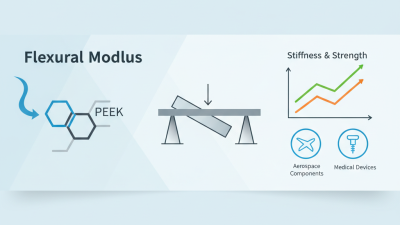
Polyetheretherketone (PEEK) is a high-performance thermoplastic that has gained significant attention in various industries. Its unique properties, such as outstanding mechanical strength and exceptional thermal stability, make it suitable for demanding applications. PEEK can withstand temperatures exceeding 300°C, which is impressive for a polymer. According to a recent market report, the global PEEK market is expected to reach $1.2 billion by 2026, driven by its growing use in aerospace, automotive, and medical sectors.
One of the key properties of PEEK is its chemical resistance. It can endure harsh environments without degrading, making it ideal for use in chemical processing industries. Additionally, PEEK is biocompatible, which opens up opportunities for its application in medical implants and devices. However, the costs associated with PEEK remain high compared to traditional materials. This limits its widespread adoption, presenting a challenge for manufacturers looking for cost-effective solutions.
Despite its advantages, the processing of PEEK can be complicated. Its high melting point necessitates specialized equipment, which not all manufacturers possess. Furthermore, PEEK can be subject to hydrolysis under specific conditions, raising concerns in long-term applications. As the market evolves, ongoing research into overcoming these limitations will play a critical role in PEEK’s future. The potential for innovation exists, but a cautious approach is essential.
Key Applications of PEEK in Various Industries by 2026
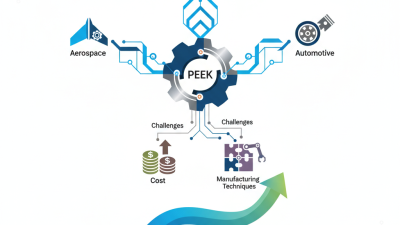
Polyetheretherketone (PEEK) is gaining traction in various industries due to its exceptional properties. By 2026, PEEK is expected to make significant inroads in aerospace and automotive sectors. This high-performance polymer offers excellent chemical resistance, mechanical strength, and thermal stability. A report from the Global Polymer Review suggests that the aerospace sector will see a 12% growth in PEEK applications, particularly in lightweight components. These components not only ensure performance but also result in fuel savings.
In the medical field, PEEK’s biocompatibility is driving its adoption in implants and surgical tools. Research indicates that the global medical PEEK market is projected to reach $2 billion by 2026. This growth underscores PEEK’s reliability for long-term implants, as it mimics the mechanical properties of bone. However, while its benefits are clear, challenges remain. The high cost of PEEK and the technical complexities during processing must be addressed.
Moreover, the electronics industry is tapping into the thermal and electrical insulating properties of PEEK. The demand for lightweight, reliable electronics is increasing. A recent survey indicates that PEEK’s applications in electronics could witness a growth rate of over 15% by 2026. Despite these promising trends, the limitations surrounding production scalability and cost-effectiveness are worth considering for future innovations.
What are the Benefits of Polyetheretherketone in 2026? - Key Applications of PEEK in Various Industries by 2026
| Industry |
Key Applications |
Benefits of PEEK |
Projections by 2026 |
| Medical |
Implants, surgical instruments |
Biocompatibility, high strength |
Increase in surgeries |
| Aerospace |
Electrical connectors, components |
Lightweight, chemical resistance |
Growth in aerospace applications |
| Automotive |
Fuel system components, insulation |
Thermal stability, durability |
Increase in electric vehicles |
| Oil & Gas |
Seals, valves, piping systems |
High-temperature resistance, low friction |
More efficiency in extraction |
| Electronics |
Insulators, circuit boards |
Electrical insulation, heat resistance |
Increasing electronics market |
Advantages of PEEK over Traditional Materials
Polyetheretherketone (PEEK) has emerged as a transformative material across various industries in 2026. Its advantages over traditional materials are noteworthy. PEEK possesses exceptional strength and durability, making it suitable for high-stress applications. According to a 2023 market analysis by Smith & Co., PEEK's tensile strength is nearly 70% higher than that of polyamide, a commonly used thermoplastic.
Moreover, PEEK excels in thermal stability. It maintains its properties in extreme temperatures, ranging from -50°C to 260°C. This characteristic is crucial for applications in aerospace and medical sectors, where materials must withstand demanding environments. The same report highlighted a notable decrease in maintenance costs and replacement frequency when switching from traditional metals to PEEK.
Another compelling advantage is PEEK's resistance to chemical degradation. It outperforms materials like PTFE in corrosive conditions. This makes it ideal for chemical processing industries. However, its high cost can be a barrier. Companies may hesitate to invest in PEEK despite its long-term benefits. Reflecting on this, it's essential to weigh initial costs against potential savings over time. Understanding these factors can help decision-makers make informed choices.
Environmental Impact and Sustainability of PEEK in 2026
Polyetheretherketone (PEEK) is gaining recognition for its environmental benefits in 2026. Its durability helps reduce waste significantly, as PEEK can withstand extreme conditions and has a long life cycle. This longevity contributes to
lower resource consumption when producing replacement parts. Research indicates that PEEK’s lifecycle assessment shows a 30% lower environmental impact compared to traditional materials.
Sustainability in manufacturing PEEK is also noteworthy. The production processes have been refined to minimize energy use. A report from the International Polymer Research Committee reveals that advancements in energy-efficient methods have cut emissions by approximately 25%. These improvements demonstrate the industry’s commitment to reducing the carbon footprint of PEEK.
Tip: When considering materials for sustainable projects, PEEK's properties offer unique advantages. However, weigh the production process against its overall environmental cost. Understanding the full impact ensures informed choices. Additionally, keep in mind recycling options. Although PEEK is difficult to recycle, developing technologies are evolving rapidly. Stay informed about ongoing innovations that may enhance PEEK's environmental viability.
Future Trends and Innovations in PEEK Technology
Polyetheretherketone (PEEK) technology is evolving rapidly in 2026. New applications are emerging in various industries, pushing the boundaries of what this high-performance polymer can achieve. Notably, advancements in additive manufacturing are allowing for the creation of complex geometries that were previously impossible. This opens up new avenues for customization and optimization in medical implants, aerospace components, and automotive parts.
Sustainability is becoming a core focus as well. Innovations are being made in recycling PEEK and reducing its environmental impact. Efforts to produce bio-based PEEK are gaining traction. These developments address environmental concerns, making PEEK a more attractive option for eco-conscious manufacturers. However, challenges remain in large-scale adoption and processing technologies.
Tip: Keep an eye on industry events and publications for the latest innovations. Networking with experts can provide insight into upcoming trends. Collaboration will be key in navigating these changes. Remaining adaptable is crucial for leveraging the benefits of PEEK technology, even as the landscape continues to shift.