How to Choose the Right Peek Plastic for Your Needs?
When selecting materials for advanced engineering applications, many industries turn to peek plastic. This high-performance thermoplastic offers exceptional thermal stability and chemical resistance. According to a recent market report by MarketsandMarkets, the peek plastic market is projected to reach USD 1.6 billion by 2024. This growth indicates its increasing relevance in sectors like aerospace, automotive, and electronics.
Choosing the right peek plastic requires understanding specific application needs. Its properties, such as a high glass transition temperature and good wear resistance, make it suitable for demanding environments. However, not all peek products perform equally. Some may fail under extreme conditions, leading to costly downtimes. Analyzing material specifications is critical.
Industry experts suggest evaluating both the mechanical and thermal properties of peek plastic. While the benefits are pronounced, the complexity of application can be daunting. Buyers often overlook critical aspects that could impact performance. Balancing cost with performance should be part of the decision-making process. Recognizing these nuances can lead to better choices and improved outcomes in engineering projects.

Understanding the Basics of Peek Plastic and Its Properties
Peek plastic, known for its unique properties, is widely utilized in various industries. Its high thermal resistance and mechanical strength make it ideal for demanding applications. This synthetic polymer can withstand temperatures up to 260°C. This makes it suitable for environments where other plastics fail.
According to industry reports, PEEK's tensile strength exceeds 90 MPa. This durability is critical in aerospace and medical applications. For instance, PEEK implants can endure body temperature while remaining biocompatible. However, the material's cost can be a barrier for some manufacturers. Balancing performance and budget is essential.
Various grades of PEEK exist, each catering to specific needs. However, choosing the wrong grade can lead to project failures. Evaluating application requirements is vital before selecting a type. Understanding the nuances of PEEK properties directly impacts performance and longevity.
How to Choose the Right Peek Plastic for Your Needs?
| Property |
Description |
Typical Applications |
| Temperature Resistance |
Can withstand high temperatures up to 260°C (500°F) without deforming. |
Aerospace, automotive, and industrial applications. |
| Chemical Resistance |
Resistant to many chemicals, solvents, and oils. |
Chemical processing, food processing, and pharmaceuticals. |
| Mechanical Strength |
High tensile strength and stiffness, ideal for load-bearing applications. |
Machinery parts, medical devices, and structural components. |
| Electrical Insulation |
Excellent dielectric properties, making it a good insulator. |
Electrical components and circuit boards. |
| Low Friction Surface |
Smooth surface with low friction coefficient. |
Bearings, seals, and sliding components. |
Evaluating Your Specific Requirements for Peek Plastic Applications
When selecting the right PEEK plastic, it is essential to evaluate your specific needs. PEEK, a high-performance thermoplastic, excels in demanding applications. Consider factors like temperature resistance, chemical exposure, and mechanical strength. Are you working in aerospace, medical, or automotive? Each sector has unique requirements. Understanding these nuances will guide your choice effectively.
Tips: Assess the operating environment. High temperatures? Look for PEEK with superior thermal stability. In chemically aggressive conditions, ensure compatibility with solvents. It’s easy to overlook these details, but they are crucial.
Mechanical properties also play a role. For instance, high strength is vital in structural applications. If your project demands flexibility, consider variants of PEEK that offer enhanced elasticity. Reflect on trade-offs between rigidity and flexibility during your selection process. The right balance can make a significant difference in performance.
Key Factors to Consider When Selecting Peek Plastic Grades
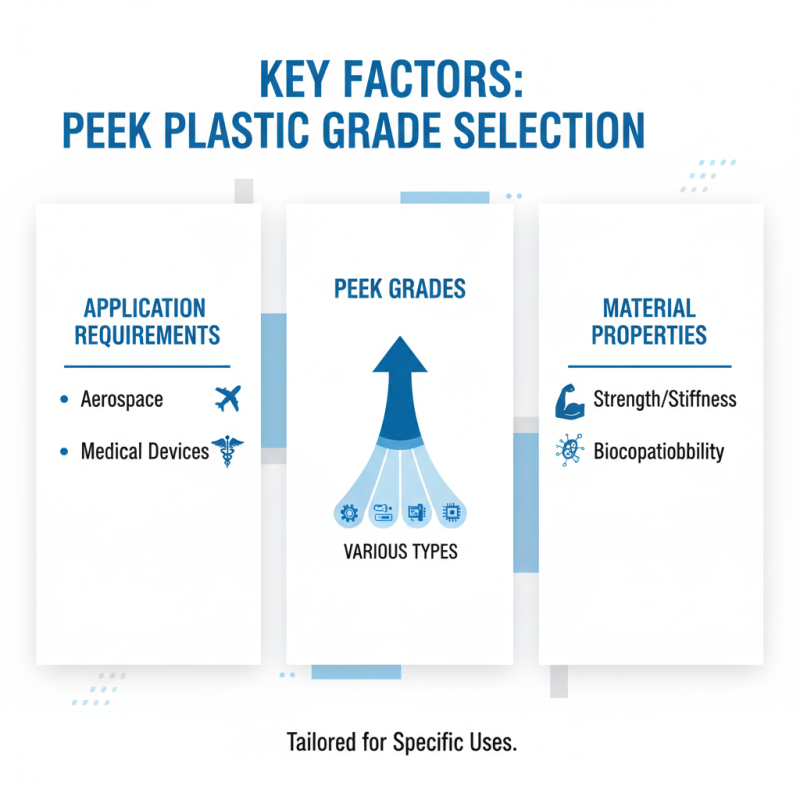
When selecting PEEK plastic, several crucial factors come into play. The application requirements often determine the necessary grade. PEEK plastic comes in various grades, each tailored for specific uses. For instance, the grade needed for aerospace applications differs significantly from that used in medical devices.
Temperature resistance is a vital characteristic. Data from industry reports indicate that PEEK can withstand continuous temperatures up to 260°C (500°F). However, for critical applications, examining the thermal capabilities of each grade is essential. Some grades may support higher temperatures but could lack other desired properties.
Tips: Always assess mechanical properties. High strength and stiffness are critical for many uses. Additionally, chemical resistance must be considered, especially in harsh environments. Some grades may excel in certain corrosive conditions while underperforming in others. Each context requires unique evaluation.
Another aspect to consider is cost-effectiveness. PEEK is more expensive compared to other plastics. Analyzing lifecycle costs can provide insights. The right choice can lead to long-term savings despite the initial investment. Ultimately, a balance between specifications, quality, and budget must be found.
Comparing Different Types of Peek Plastics on the Market
When choosing the right PEEK plastic, understanding the different types is crucial. PEEK, or polyether ether ketone, comes in various grades. Each grade has unique properties suitable for specific applications. For instance, some grades offer enhanced chemical resistance, making them ideal for harsh environments. Others excel in high-temperature applications, maintaining integrity under extreme heat.
When selecting PEEK, consider the mechanical properties required for your project. Some types have higher tensile strength, while others provide better impact resistance. You may find PEEK plastics that are reinforced with carbon fibers. These reinforced types can be more rigid and are useful for heavy-duty applications. However, they may also limit flexibility, which is a factor to think about.
It’s essential to weigh the pros and cons of each type. Relying solely on technical specifications can be misleading. Real-world performance under actual use conditions may differ from lab results. It's worth considering feedback from others in the industry. Engaging with professionals who have experience with various PEEK plastics can provide invaluable insights. This approach can help you make a more informed decision based on practical application, rather than theoretical data alone.
Tips for Sourcing and Purchasing the Right Peek Plastic Material
When sourcing PEEK plastic, understanding your specific needs is essential. Consider the application of the material. PEEK offers excellent thermal resistance and chemical stability. However, different grades serve various purposes. Research the characteristics of each grade. For instance, some might be ideal for aerospace, while others suit medical applications. Don't overlook the importance of thermal conductivity.
Establish a reliable supplier relationship. A good supplier should provide extensive information about their products. This includes datasheets and compliance certifications. Ask about their quality assurance processes. A trustworthy supplier will not hesitate to share this information. It's vital to verify that the material meets the necessary regulatory standards for your intended use.
Conduct hands-on tests when possible. This could involve small-scale trials to assess performance. Relying solely on data can be misleading. Real-world applications can reveal unforeseen challenges. Observe how the material behaves under stress or extreme conditions. These insights are invaluable in making an informed decision. Reflecting on your results can lead to more refined choices in the future.