10 Essential Tips for Understanding Carbon Peek Material Properties?
Understanding carbon peek material properties is crucial in various high-performance applications. This advanced thermoplastic offers exceptional chemical resistance and thermal stability. Industry reports show that carbon PEEK can endure temperatures exceeding 250°C, making it suitable for aerospace and automotive components.
Recent studies indicate that carbon PEEK has a tensile strength up to 190 MPa. This strength contributes to its reliability in demanding environments. However, while this material excels in many areas, challenges do exist. The processing conditions can affect its properties and performance, requiring precise handling and expertise.
Ultimately, grasping carbon peek material properties can lead to innovative solutions in engineering. Familiarity with its unique characteristics, advantages, and limitations can empower professionals to make informed decisions. This understanding is essential for optimizing material usage and achieving superior product outcomes.
Key Characteristics of Carbon Peek Material
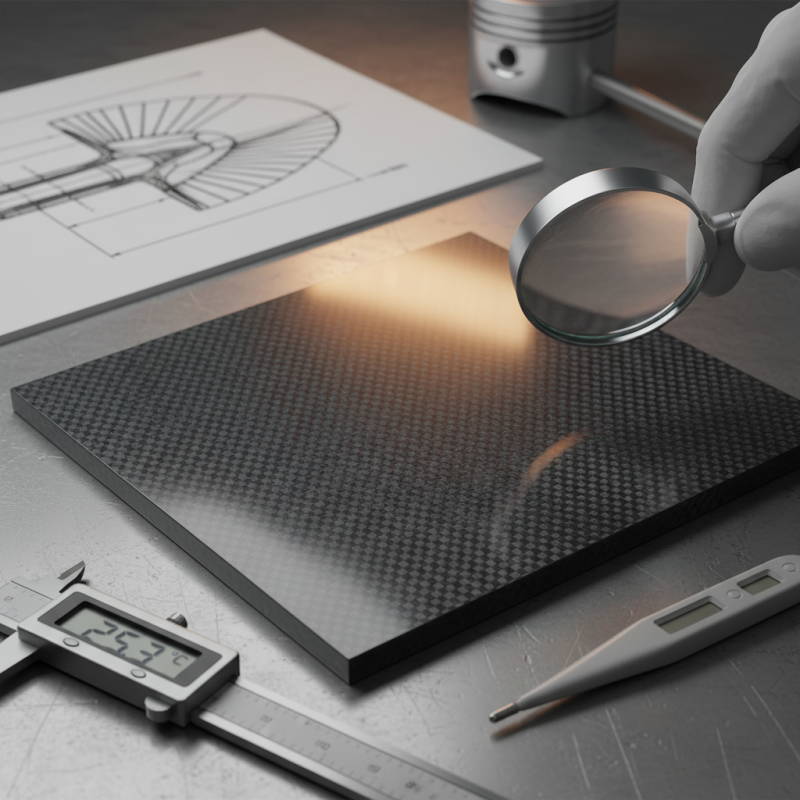
Carbon PEEK, short for polyether ether ketone, is a high-performance thermoplastic known for its unique properties. This material boasts exceptional strength, stiffness, and chemical resistance. The tensile strength of Carbon PEEK can reach up to 100 MPa. It maintains its stability under extreme temperatures, with a continuous use temperature of about 260°C. Its glass transition temperature is around 143°C, making it suitable for various industrial applications.
One striking characteristic of Carbon PEEK is its low coefficient of friction. This property makes it ideal for demanding environments. According to industry reports, it exhibits a wear rate significantly lower than that of traditional materials, such as metals or simple plastics. This translates into less frequent replacements and reduced maintenance costs.
Despite these advantages, Carbon PEEK has some drawbacks. Its processing can be challenging due to its high melting point. Not all manufacturing methods are compatible, which can lead to material waste. Thus, understanding the nuances of its production is crucial. The balance between its robust performance and manufacturing considerations requires careful reflection from engineers.
Mechanical Properties and Performance of Carbon Peek
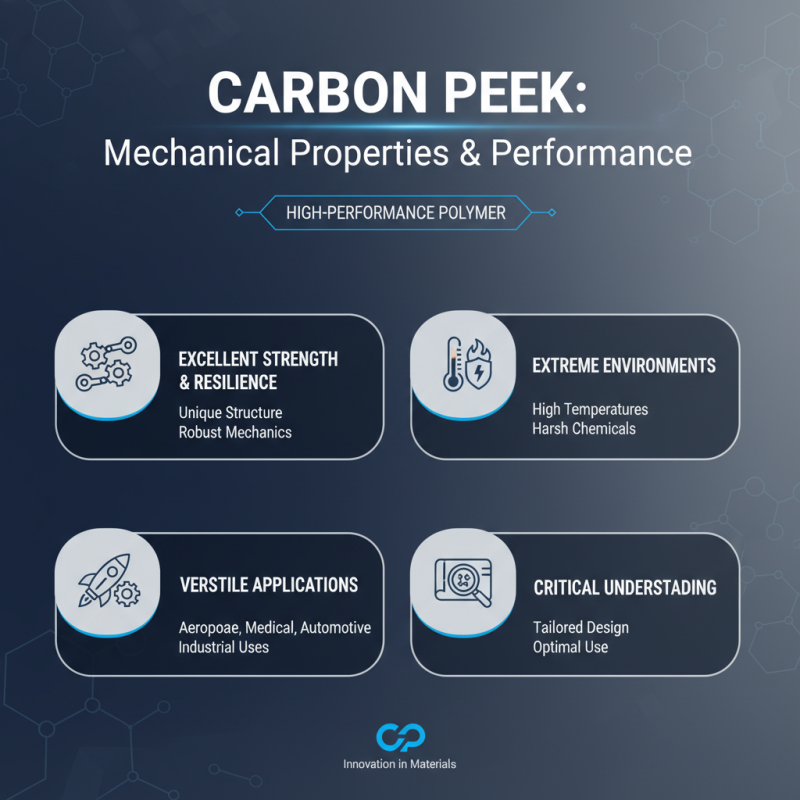
Carbon PEEK is a high-performance polymer known for its excellent mechanical properties. This material stands out due to its unique structure, which contributes to strength and resilience. It can withstand high temperatures and harsh environments, making it ideal for various applications. However, understanding its properties is essential for effective use.
When discussing mechanical properties, toughness is a crucial factor. Carbon PEEK shows high tensile strength, providing durability in demanding situations. But, this strength may vary depending on the processing and manufacturing techniques used. It's important to recognize that not all carbon PEEK materials perform the same way under stress. Flexural modulus is another key characteristic. It measures how much the material will bend under load. Buyers should consider the specific requirements of their projects to select the right grade of carbon PEEK.
Another aspect to consider is fatigue resistance. Carbon PEEK can handle repetitive stresses well. Yet, users should conduct thorough testing in their application environment. Different factors, like temperature and chemical exposure, can affect performance. Therefore, evaluating the material in realistic scenarios is essential. This understanding will lead to better decision-making and outcomes in real-world applications.
Thermal Stability and Temperature Resistance of Carbon Peek
Carbon Peek is known for its exceptional
thermal stability. This material can resist high temperatures without degrading. Typically, it
maintains its properties in environments exceeding 200 degrees Celsius.
Some applications even push it beyond this limit. However, the thermal stability can vary based
on specific manufacturing processes. It’s essential to consider these factors when selecting
Carbon Peek for heat-sensitive applications.
The temperature resistance of Carbon Peek makes it suitable for various industries.
Aerospace, automotive, and electronics
often rely on it. But, not all Carbon Peek grades are equal. Some might perform
better than others under thermal stress. Testing under real-world conditions is critical.
Engineers must evaluate
how the material behaves at elevated temperatures. This can lead to unexpected results.
Using it without proper analysis may yield failures. Exploring the dissimilarities in
Carbon Peek grades can reveal valuable insights. Understanding these nuances is key
to leveraging its full potential.
Applications and Uses of Carbon Peek in Various Industries
Carbon Peek, known for its outstanding performance, finds widespread use across diverse industries. In aerospace, its lightweight nature and high strength make it an ideal choice for structural components. Engineers often select Carbon Peek for parts that must endure extreme temperatures. It helps reduce aircraft weight while maintaining safety.
In the medical field, Carbon Peek is used for implants and surgical tools. Its biocompatibility and chemical resistance are critical for patient safety. However, the high cost of Carbon Peek can limit its use. Not every hospital or clinic can afford it.
Automotive manufacturers appreciate Carbon Peek's durability and resistance to wear. Parts made from this material can withstand harsh conditions. However, the recycling process remains a challenge. Many still rely on traditional materials, despite the benefits. Each industry must weigh the pros and cons carefully. The potential of Carbon Peek is immense, yet practical limitations persist.
Understanding Carbon Peek Material Properties
The bar chart above illustrates key properties of Carbon Peek, highlighting its impressive tensile and flexural strength, high temperature resistance, density, and low moisture absorption. These properties make Carbon Peek an ideal material for application in various industries, including aerospace, automotive, and medical sectors.
Comparative Analysis of Carbon Peek with Other Polymers
Carbon Peek stands out among polymers due to its unique properties. It exhibits high strength, exceptional thermal resistance, and chemical stability. Unlike many other polymers, Carbon Peek maintains its integrity at elevated temperatures. This makes it suitable for demanding applications, such as aerospace and automotive industries.
When compared to traditional polymers, Carbon Peek shows notable advantages. For example, while common plastics may warp under heat, Carbon Peek remains unaffected. However, its cost is significantly higher than typical alternatives. Understanding the trade-offs is crucial. Some users may find the price prohibitive, despite its benefits.
Further, Carbon Peek's machining capabilities can be complex. It requires specific tools and techniques for optimal performance. Not all manufacturers are equipped to handle this material efficiently. It's important for engineers to assess whether they can manage these challenges. The choice of polymer should align with project requirements and capabilities.
10 Essential Tips for Understanding Carbon Peek Material Properties
| Property |
Carbon Peek |
Polymer A |
Polymer B |
Polymer C |
| Tensile Strength (MPa) |
90 |
70 |
75 |
65 |
| Impact Resistance (kJ/m²) |
15 |
10 |
12 |
8 |
| Temperature Resistance (°C) |
260 |
200 |
210 |
180 |
| Flexural Modulus (GPa) |
3.5 |
2.8 |
3.0 |
2.5 |