Huntersville, NC: (704) 992-8100     Putnam, CT: (860) 928-7911

Why Choose a Fiber Opening and Pillow Filling Machine?

Choosing a Fiber Opening And Pillow Filling Machine can improve consistency from loose fiber to finished pillow. The machine separates compressed fibers and prepares them for controlled filling. This matters when dense clumps create uneven corners or pillows feel different from one batch to the next. A well-matched system can help reduce manual handling and keep production moving at a steadier pace. Still, equipment alone cannot guarantee a uniform product.

The right choice depends on the fiber type, pillow size, target output, and available floor space. Operators should examine feeding methods, filling controls, cleaning access, and routine maintenance needs. Dust management and safe operating procedures also deserve attention in a real workshop. Small details matter. A stated production rate may not reflect results with every material, so ask how performance was tested and request a practical demonstration when possible. Watch how evenly the machine opens the fiber, how smoothly it feeds, and whether the filling weight can be adjusted for different products.

Consider how the machine will fit into the full production line, not just its headline specifications. Check power requirements, operator training, spare-part support, and the space needed for service access. These points are easy to overlook during a purchase. They can affect daily reliability later. No single model suits every business, and a faster machine may not be the best value if it creates quality problems or requires difficult upkeep. A careful comparison helps buyers choose equipment that fits their materials, workflow, and realistic production goals.
Why Choose a Fiber Opening and Pillow Filling Machine?

What Is a Fiber Opening and Pillow Filling Machine?

A fiber opening and pillow filling machine prepares loose fiber and delivers it into pillow shells. The opening unit separates compressed tufts into a more even, airy feed. A blower or mechanical conveyor then moves the fiber through a hose and filling nozzle. The operator positions the shell at the nozzle and controls the fill. It is a practical bridge between raw fiber and a finished pillow.

The details matter. If fiber remains clumped, pillows can feel lumpy; if it is over-opened, the fill may lose resilience. Different fibers and blends respond differently, so operators adjust feed rate and airflow, then check sample pillows by hand. Textile Exchange’s Materials Market Report 2024 estimates global fiber production reached 124 million tonnes in 2023. This is market-wide context, not a measure of pillow-machine demand, but it shows the scale and variety of fibers manufacturers may process.

A useful machine should allow consistent feeding, accessible cleaning, and straightforward adjustment. Watch the fiber as it exits: does it look loose and uniform, or do dense knots remain? Also compare pillow weight and feel across several runs. Small differences are easy to miss. Still, settings alone cannot guarantee a comfortable pillow; fiber quality and shell construction matter too. A careful trial run is worth the time.

How Does the Machine Open Fiber and Fill Pillows?

Why Choose a Fiber Opening and Pillow Filling Machine?

How Does the Machine Open Fiber and Fill Pillows?

A fiber opening and pillow filling machine loosens compacted fiber before directing it into a pillow shell. The operator places fiber into the feed area, where rollers or opening teeth separate clumps. Airflow then carries the loosened material through a delivery tube. This helps distribute filling more evenly than pushing handfuls into the shell by hand. Small details matter. Fiber type, moisture, and feed rate can all affect the result.

Tips: Start with a steady, moderate feed rate. Check the fiber for clumps before loading, and keep the filling nozzle clear. Follow the machine’s operating instructions, especially around moving parts.

During filling, the operator guides the nozzle into the pillow opening and controls how much fiber enters. Some machines use timed cycles or weight settings; others depend more on the operator’s judgment. A light pillow may need less filling, while a firmer one needs more. Pause to check its shape and feel. Settings can take adjustment, and a first attempt may be uneven. Make small changes, then test another pillow before changing the whole batch.

What Are Its Main Components and Functions?

Why Choose a Fiber Opening and Pillow Filling Machine?

A fiber opening and pillow filling machine prepares loose filling and directs it into pillow shells. Its opening section breaks apart compressed fiber, helping create a softer, more even fill. The filling section then uses airflow to move material through a hose and nozzle. That matters. Lumps can leave uneven corners, while excessive airflow may make filling harder to control.

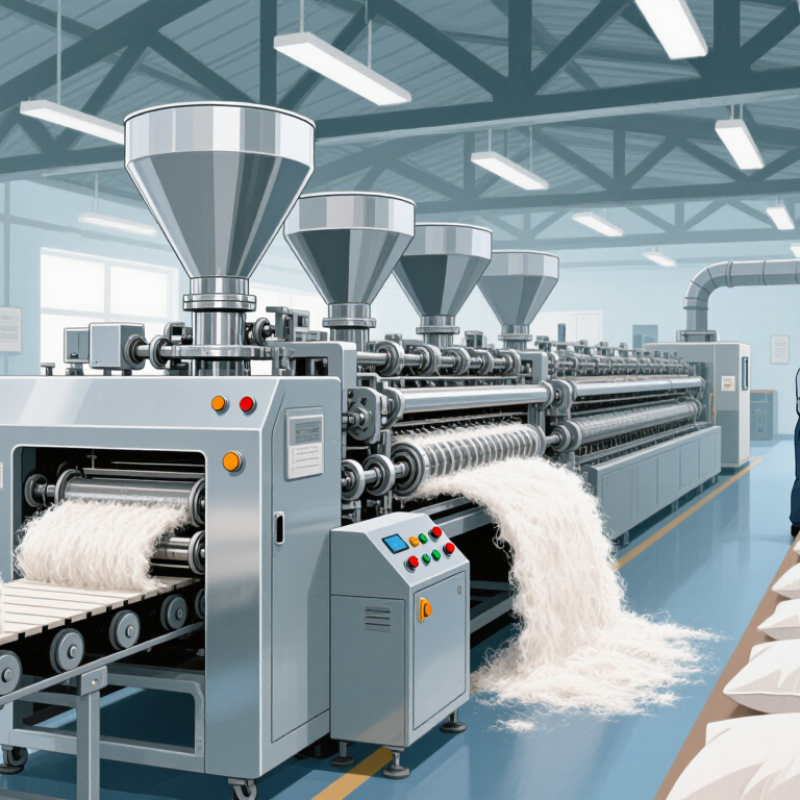
The main components usually include a feed hopper, opening rollers, an air blower, a delivery hose, and a filling nozzle. The hopper holds fiber before processing. Rollers loosen it; the blower carries it toward the pillow shell. A control panel may adjust feed rate or airflow, depending on the machine. Some setups also use a weighing device for more consistent pillow weights. Small details count. A nozzle that fits the shell opening can reduce fiber loss, though operators may still need to adjust settings for different fabrics and filling materials.

Tips: Keep the hopper free of tangled scraps, and check hoses for blockages. Test a few pillows before a full run. Results can vary with fiber type, shell size, and operator settings, so routine checks remain important.

Why Choose a Fiber Opening and Pillow Filling Machine? — Main Components and Functions

Component Main Function Role in Pillow Production Operational Consideration
Fiber Feeding Conveyor or Feed Hopper Receives and supplies fiber to the opening section at a steady rate. Helps maintain a continuous material flow and reduces uneven feeding. Keep the feed area clear and avoid overloading it with compressed material.
Opening Roller or Opener Separates compressed fiber clusters and loosens the material. Helps create a more open, evenly distributed fill for pillow production. Suitable roller settings depend on the fiber type and its condition.
Blower and Air Duct Moves opened fiber through the machine toward a storage chamber or filling outlet. Supports pneumatic transfer and can help deliver fiber to a filling station. Airflow and duct condition affect material movement; inspect for blockages and leaks.
Fiber Storage Chamber Temporarily holds opened fiber before it is dispensed. Provides a buffer between fiber opening and pillow filling, where included in the system. Capacity and layout vary by machine configuration and production needs.
Filling Nozzle or Delivery Outlet Directs fiber into a pillow shell or other textile product. Provides a controlled point for filling and helps reduce material spillage. Choose an outlet suitable for the product opening and filling method.
Metering or Dosing System Controls the amount of fiber dispensed, using a configured measuring method. Helps operators achieve more consistent fill levels between pillows. This feature may be optional; verify whether the system measures by weight, time, or another method.
Electrical Controls and Safety Devices Allow operators to start, stop, and adjust machine functions and provide protective controls. Support repeatable operation and safer handling of the production process. Follow the machine instructions and keep guards and emergency-stop devices accessible.
Dust Collection or Filter Unit Captures airborne lint and dust generated during fiber processing, where fitted. Helps keep the work area cleaner and supports routine workplace housekeeping. Clean or replace filters according to the equipment instructions and material conditions.

Why choose this equipment? Combining fiber opening with pillow filling can streamline material handling, reduce manual transfer, and support more consistent filling. Actual output, available features, and suitable fiber types depend on the machine configuration and production requirements.

What Benefits Does It Offer in Pillow Production?

Why Choose a Fiber Opening and Pillow Filling Machine?

What Benefits Does It Offer in Pillow Production?

Pillow quality often starts before the filling reaches the shell. A fiber opening and filling machine loosens compressed fiber, separates clumps, and feeds it to the filling station. Better-opened fiber can spread more evenly, helping pillows feel consistent from edge to edge. That matters when customers compare samples by touch.

The process can also reduce repeated hand teasing and manual weighing. Operators can adjust feed speed and filling volume for different pillow sizes or firmness targets. On a busy line, this may steady output and limit avoidable fiber waste. Less rework, too. Results still depend on clean fiber, sensible settings, and regular checks; a machine cannot correct poor raw material by itself.

There are practical shop-floor benefits. A controlled feed can make filling faster, while an accessible cleaning area helps remove stray fibers between batches. Teams should check whether the machine handles their fiber type and desired pillow weight before purchase. Noise, dust collection, and operator training deserve attention as well. A small uneven patch may seem minor, but it can change how a finished pillow settles after use. In real production, adjustments are rarely perfect on the first try. That is normal, and it is worth recording what works.

Why Choose a Fiber Opening and Pillow Filling Machine?

See how the two machines support different stages of pillow production.

Fiber opening equipment prepares and loosens filling fiber; pillow filling equipment feeds fiber into pillow shells. Separating these tasks can help organize the production workflow. Bars indicate typical primary functions, not production speed or guaranteed performance; capabilities vary by machine configuration.

What Should Buyers Consider When Choosing a Machine?

Choosing a fiber opening and pillow filling machine starts with the materials you actually process. Compare the fiber types, lengths, and condition listed by the supplier with the machine’s operating range. Ask how evenly it opens compressed fiber and whether the output suits your pillow design. A sample run can reveal clumps or uneven filling that a brochure may not show. Small details matter.

Consider production rate alongside filling accuracy. A fast machine is not useful if operators must stop often to correct weight or clear blockages. Check how filling weight is adjusted, how controls are used, and how quickly routine cleaning can be done. Look at the floor space, electrical requirements, noise, and access to wear parts. I would not judge by speed alone; that is an easy mistake. A little uncertainty is normal until the machine is tested with your own fiber.

Tips: Ask for a trial using your material and target pillow size. Record output, fill consistency, and cleaning time. Have operators test the controls, too. Their feedback may uncover a small issue before installation. Read the maintenance schedule carefully.