What is a Knife Edge Conveyor and How Does it Work?
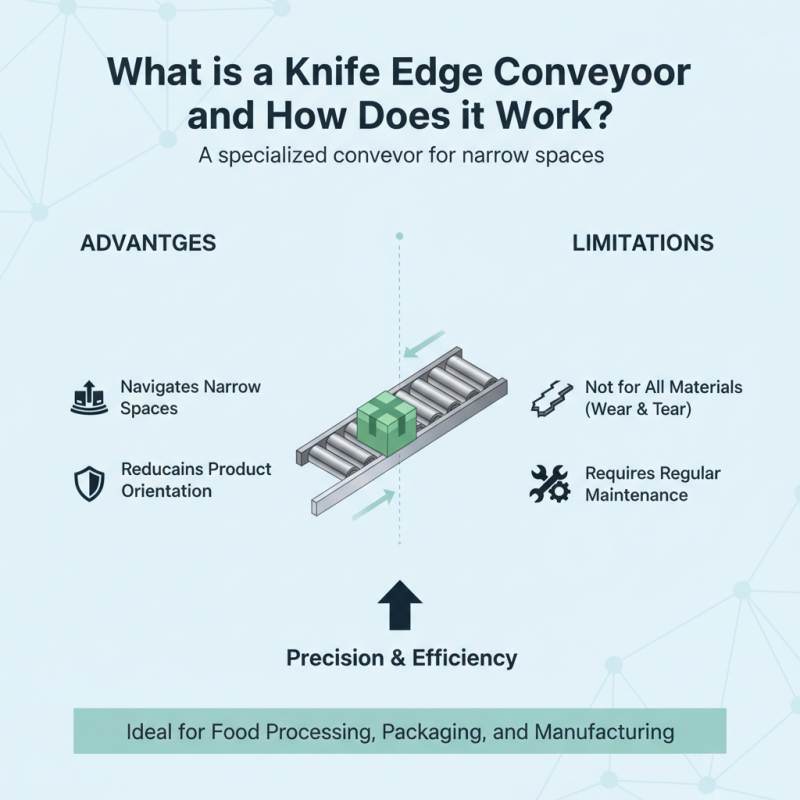
A Knife Edge Conveyor is a specialized conveyor system designed to handle various materials. Its unique structure allows it to transport products through narrow spaces, making it ideal for numerous applications. This conveyor type is engineered for precision and efficiency, playing a crucial role in different industries, from food processing to packaging.
The design features a sharp edge that facilitates the movement of items in tight quarters. This can be especially important in manufacturing environments where space is limited. It also helps in maintaining the orientation of products, which can be challenging with broader conveyors. By ensuring that materials remain stable during transport, the Knife Edge Conveyor reduces the risk of damage or contamination.
While effective, there are limitations. The sharp edge may not be suitable for all materials, raising concerns about wear and tear over time. Maintenance is essential to prevent issues that could disrupt operations. Understanding both the advantages and challenges of Knife Edge Conveyors is vital for industries looking to improve their logistical processes.
What is a Knife Edge Conveyor: Definition and Overview
A knife edge conveyor is a specialized type of conveyor system. It utilizes a narrow edge as its guiding mechanism. This design allows for precise movement of materials, particularly in production lines. The unique shape helps navigate curves and ensures items stay in place. Its compact dimensions make it suitable for tight spaces.
The operation of a knife edge conveyor involves a series of belts and pulleys. Materials are transported along the edge, maintaining stability throughout the process. This method is efficient for items that require careful handling, such as delicate or small components. The system can be adjusted for various heights and angles.
While knife edge conveyors are effective, they come with challenges. Maintenance is crucial, as wear on the belts can lead to performance issues. Operators must regularly check alignment and tension to prevent problems. Over time, the edges may become worn and less effective. Reflection on these details is important for optimizing performance.
Key Components of Knife Edge Conveyors and Their Functions
Knife edge conveyors are vital in many industries, ensuring efficient handling of products. These systems consist of specific components that enhance functionality. Key parts include the conveyor belt, the knife edge idler, and the frame. The conveyor belt moves items from one point to another. Its design accommodates different product sizes and weights. Efficiency is often linked to how well this belt is maintained.
The knife edge idler plays an essential role in transferring products smoothly. It ensures that items do not slip or fall during movement. Many experts agree that a well-functioning knife edge conveyor can improve productivity by up to 30%. This statistic emphasizes the importance of proper component selection and maintenance. A strong frame supports the entire structure, affecting durability and stability. Adjustments may be needed over time to cater to different loads.
Despite their advantages, knife edge conveyors can face challenges. Misalignment in their components can lead to reduced efficiency. Regular checks are crucial for addressing such issues. For instance, a small misalignment could cause product damage or downtime. Thus, investing in quality components and thorough maintenance is necessary for optimal performance.
Key Components of Knife Edge Conveyors and Their Functions
This chart illustrates the importance of various key components of knife edge conveyors based on their functionality and usability in material handling. The data represents the percentage contribution of each component to the overall efficiency of the conveyor system.
Advantages of Knife Edge Conveyors in Material Handling
Knife edge conveyors are specialized systems designed for precise material handling. These conveyors excel in transporting small or fragile items, minimizing product damage. The knife edge design allows for a narrow transfer point, enabling products to move with reduced friction and enhanced stability. This aspect is particularly essential in industries like food processing or pharmaceuticals, where cleanliness and safety are paramount.
One significant advantage of knife edge conveyors is their ability to navigate tight spaces. They can easily be integrated into existing operations without requiring extensive redesigns. This flexibility often leads to improved workflow efficiency. With their smooth operation, these conveyors also contribute to lower operational noise levels, enhancing workplace environment.
**Tip:** Regular maintenance checks are crucial. A small issue can disrupt production. Inspect conveyor belts for wear and ensure alignment to prevent uneven handling.
Another aspect to consider is load capacity. While knife edge conveyors are efficient, overloading can lead to breakdown. Operators should be cautious and always adhere to specified limits. Understanding operational needs is key. Adjusting speed and incline based on materials can further enhance performance.
What is a Knife Edge Conveyor and How Does it Work? - Advantages of Knife Edge Conveyors in Material Handling
| Feature | Description | Advantages |
| Design | A conveyor that has a knife edge profile to allow smooth transfer of materials. | Allows for the movement of small or irregularly shaped items without jamming. |
| Applications | Used in packaging, food processing, and manufacturing environments. | Highly versatile and adaptable to various industries. |
| Efficiency | Designed to minimize space while enhancing throughput. | Increases production efficiency by enabling faster material handling. |
| Maintenance | Simple design that requires less maintenance compared to other conveyors. | Cost-effective long-term solution due to reduced servicing needs. |
| Customization | Available in various sizes and configurations to fit specific needs. | Tailored solutions for unique material handling requirements. |
Industrial Applications: Where Knife Edge Conveyors Are Used
Knife edge conveyors play a crucial role in various industrial applications. Their design allows for efficient transport of products along narrow belts, which is essential in tight spaces. Common industries utilizing these conveyors include food processing, packaging, and pharmaceuticals. According to industry reports, over 30% of conveyor systems in these sectors are knife edge designs, showcasing their popularity.
In food processing plants, knife edge conveyors are particularly valuable. They handle delicate items like baked goods without damaging them. Their smooth operation reduces product loss. This is vital, considering that food waste accounts for about 30-40% of the total food supply in many regions. Using these conveyors can minimize such waste, improving overall efficiency and sustainability.
Tip: Regular maintenance is key. Inspect the conveyor regularly to prevent unexpected downtime. Additionally, ensure proper alignment to avoid wear and tear.
In packaging operations, knife edge conveyors facilitate the transfer of items between machines. They can directly link filling stations to packaging units. This improves workflow and speeds up production. However, businesses should be mindful of overloading the conveyor, as it can lead to breakdowns and costly repairs. Balancing efficiency with safe operation is essential for long-term success.
Maintenance and Safety Considerations for Knife Edge Conveyors
Knife edge conveyors are vital in many industries. They transport packages and materials efficiently. However, their maintenance and safety cannot be overlooked. Regular inspections are essential to maintain operational reliability. According to industry reports, nearly 20% of conveyor system failures occur due to inadequate maintenance.
Safety considerations include ensuring proper training for operators. A lack of training may lead to accidents. Moreover, checking for obstructions along the conveyor path is crucial. Statistics show that over 30% of workplace injuries related to conveyors stem from improper handling. Wearing appropriate personal protective equipment (PPE) can reduce risk significantly.
Fouling is another common issue that requires attention. Regular cleaning can prevent buildup that affects efficiency. A clean system works better and lasts longer. Operators must develop a routine for maintenance checks. Addressing minor issues before they escalate can save time and costs. Overall, proactive maintenance and safety protocols are not just best practices; they are necessary for optimal conveyor performance.