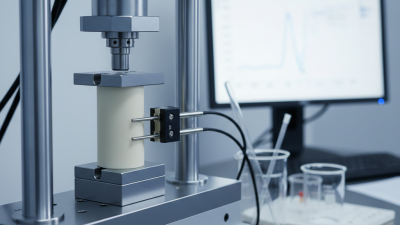
How to Measure Compressive Strength of PEEK Materials?
The compressive strength of PEEK materials is a critical attribute for various industries. This thermoplastic polymer is known for its high performance and durability. According to Dr. Emily Thompson, a leading expert in polymer science, “Understanding the compressive strength of PEEK is crucial for its application in demanding environments.”
In the aerospace and medical fields, the compressive strength of PEEK influences design choices. It plays a significant role in the selection of materials for implants, where strength and biocompatibility are essential. Manufacturers often face challenges in measuring this strength accurately. Variations in processing conditions can lead to inconsistencies in results.
Measuring the compressive strength of PEEK requires precision and valid methodologies. Employing standardized tests ensures reliability in reported figures. However, results may still vary based on formulations. Ongoing research aims to refine these testing methods for better accuracy. Embracing a deeper understanding of compressive strength can lead to improved application and performance of PEEK materials.

Overview of Compressive Strength in PEEK Materials
Compressive strength is a vital property of PEEK materials, determining their reliability in various applications. PEEK, or polyether ether ketone, is known for its high strength and thermal stability. Measuring compressive strength involves understanding how PEEK behaves under pressure. This knowledge helps engineers and designers choose the right materials for their projects.
Testing typically occurs in a controlled environment. Standardized methods, like ASTM D695, provide a framework for these evaluations. Specimens are created in specific shapes to ensure uniformity. The process requires precision and adherence to guidelines. Accurate results depend on factors such as temperature and loading rates. This aspect often causes friction in results. Variability in measurements may lead to questions regarding material performance.
While PEEK shows exceptional compressive strength, not all formulations are equal. Different additives can alter its behavior. Engineers should consider these variations when planning projects. Awareness of the potential for inconsistency in results is essential. Balancing performance with the appropriate methods requires careful thought. A thorough understanding of compressive strength can guide effective use in demanding environments.
Importance of Measuring Compressive Strength in Engineering Applications
Measuring the compressive strength of PEEK materials is essential in engineering applications. In industries like aerospace and automotive, the integrity of materials under load is critical. A report by the Society of Plastics Engineers indicates that PEEK can withstand compressive strengths up to 100 MPa, depending on its formulation. This strength plays a pivotal role in ensuring reliability and safety in high-stress environments.
Understanding the compressive strength helps engineers predict how a material will behave under various loads. This insight informs design choices and material selection, reducing the risk of failure. According to a study published in the Journal of Polymer Science, materials must exhibit consistent performance to meet industry standards. Fluctuations in compressive strength can lead to catastrophic failures.
When testing compressive strength, ensure proper alignment of samples. Misalignment can lead to inaccurate readings. Additionally, consider temperature and humidity, as these can affect material properties. Regularly calibrate your testing equipment to maintain accuracy. Remember to document every test for future reference, facilitating better understanding and improvement in the design process.
Standard Testing Methods for Compressive Strength of PEEK
When measuring the compressive strength of PEEK materials, standardized testing methods are crucial. The most commonly used approach is ASTM D695. This method involves applying a compressive load to a sample until it fails. Precise measurements of the applied load and the resulting deformation are critical. Ensuring the sample is free of defects is essential. Any irregularities can skew results.
Another standard is ISO 604. Similar to ASTM D695, this method also measures compressive strength. It focuses on both small and large samples. The environment during testing affects results greatly. Temperature and humidity must be controlled. It’s important to calibrate testing equipment regularly to maintain accuracy.
During testing, always document observations meticulously. Even minor inconsistencies can indicate testing errors. Ensure the sample dimensions adhere to specifications. Taking multiple measurements helps identify anomalies. This data is invaluable for understanding material performance. Proper preparation and attention to detail will yield more reliable results.
How to Measure Compressive Strength of PEEK Materials? - Standard Testing Methods for Compressive Strength of PEEK
| Test Method |
Sample Shape |
Load Application |
Maximum Compressive Strength (MPa) |
Standard |
| ASTM D695 |
Cylindrical |
Uniaxial |
150 |
ASTM |
| ISO 604 |
Square Prism |
Biaxial |
160 |
ISO |
| DIN 53421 |
Rectangular Prism |
Uniaxial |
140 |
DIN |
| ASTM D748 |
Cylindrical |
Uniaxial |
155 |
ASTM |
Sample Preparation Techniques for PEEK Compressive Strength Testing
Sample preparation is critical when testing the compressive strength of PEEK materials. Proper techniques ensure the accuracy of results and adherence to industry standards. According to ASTM D695, sample dimensions and uniformity significantly influence test outcomes. This standard specifies that samples should ideally be cylindrical or rectangular, with a surface finish that minimizes imperfections.
During sample preparation, maintaining consistent temperature and humidity levels is essential. PEEK materials are sensitive to environmental conditions. Researchers found that a controlled environment leads to a more reliable assessment of compressive strength. Rigid adherence to preparation protocols reduces inconsistencies. Some studies report deviations in strength results by up to 15% when sample conditions are not optimized.
Surface roughness also plays a role in results. A rough surface can lead to stress concentrations that affect failure modes. Historical data suggests that roughness increases the likelihood of premature failure in tests. Therefore, achieving a fine finish can improve reliability. Ongoing reflections on these techniques are vital. Continuous testing and evaluation help refine preparation methods, leading to more accurate and dependable results in PEEK compressive strength testing.
Interpreting Results and Factors Affecting Compressive Strength in PEEK
Compressive strength is vital for evaluating PEEK materials. Several factors influence this property. The structure of the material plays a crucial role. Variations in molecular weight can impact the strength significantly. Higher molecular weight typically enhances strength, but processing conditions can cause inconsistencies.
Temperature is another critical aspect. Elevated temperatures can soften the material, reducing compressive strength. Yet, testing at lower temperatures might not represent real-world applications. It's essential to consider these environmental variables for accurate results.
Testing methods also affect measurements. Standardized methods should be employed to ensure reliability. Differences in sample preparation can lead to misleading values. Understanding these nuances is imperative for precise interpretation of results. Evaluating the compressive strength of PEEK requires a comprehensive approach, factoring in all variables at play.