What is Peek Thermal Properties and Their Applications?
Peek thermal properties are crucial for various advanced applications. Polyether ether ketone (PEEK) is a high-performance polymer known for its exceptional thermal stability. According to a report by MarketsandMarkets, the global PEEK market is projected to reach USD 1.28 billion by 2025, mainly driven by its applications in aerospace and medical industries.
These thermal properties include a high glass transition temperature and low thermal conductivity. This makes PEEK an ideal choice for environments where heat management is vital. Its ability to withstand extreme temperatures enhances the reliability of components used in critical areas. However, the high cost of PEEK remains a concern for widespread use.
The trade-off between performance and expense prompts reflection on its broader application. Continuous research aims to improve PEEK thermal properties and reduce costs. As the industry evolves, understanding these properties becomes essential in designing future materials tailored to specific applications.

Overview of Peek Thermal Properties
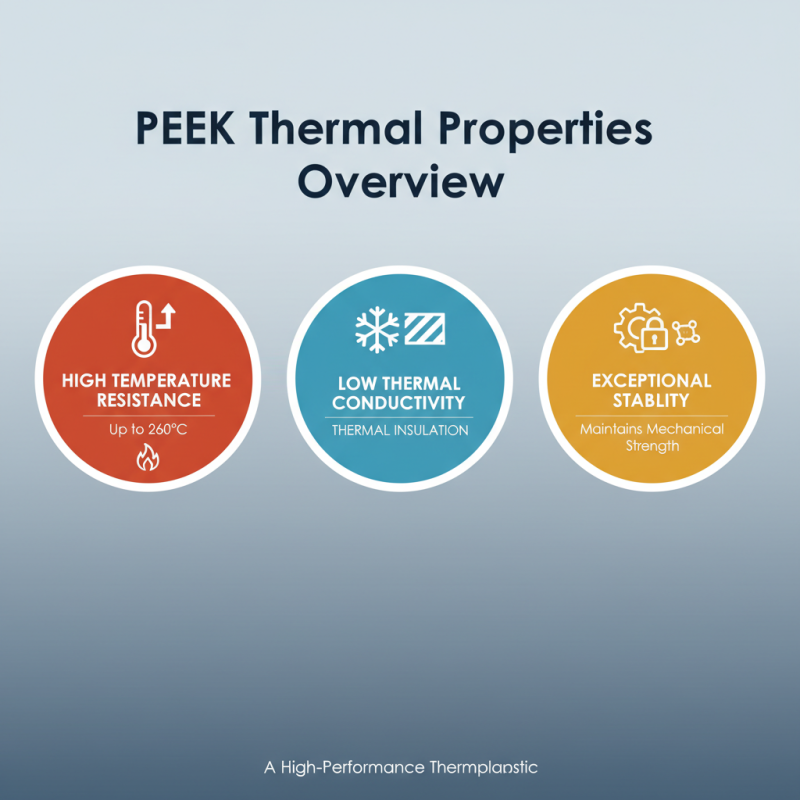
Peek, or polyether ether ketone, boasts impressive thermal properties. It withstands high temperatures, often up to 260°C, without losing mechanical strength. This high-performance thermoplastic is known for its low thermal conductivity, making it suitable for thermal insulation applications. Its ability to maintain stability under extreme conditions distinguishes it from many other materials.
Applications of Peek are diverse. In aerospace, it helps in lightweight structural components that endure heat. In the automotive sector, it serves in fuel lines and connectors, enhancing durability and efficiency. Its resistance to various chemicals also opens doors for use in medical devices. However, while Peek offers great performance, it is not always easy to process. Handling requires specialized equipment and expertise to achieve optimal results. The cost of Peek can pose challenges for some applications, leading to discussions about trade-offs in material selection.
Despite its advantages, using Peek effectively necessitates a thorough understanding of its properties. Engineers must evaluate the specific thermal behavior required for each application. Overlooking details can lead to unforeseen issues. The complexity of its material properties calls for continuous study and experimentation.
Key Characteristics of Peek Materials
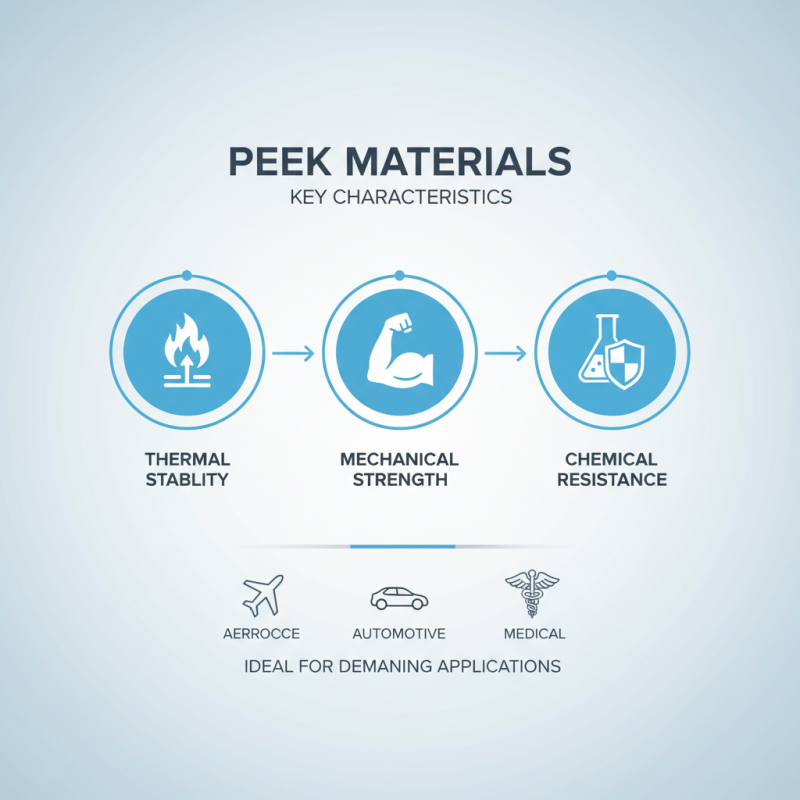
PEEK (Polyether Ether Ketone) is a high-performance thermoplastic known for its unique properties. Its key characteristics include excellent thermal stability, mechanical strength, and chemical resistance. These features make PEEK a popular choice in industries such as aerospace, automotive, and medical applications.
Materials like PEEK are resistant to temperatures as high as 260°C. This capability is crucial for many demanding environments where materials could easily fail. PEEK also offers low flammability and low smoke emission. These traits enhance safety in applications where fire risk is a concern.
**Tip**: When working with PEEK, consider the environment it will be used in. Assess factors like temperature, pressure, and exposure to chemicals for optimal performance.
PEEK’s mechanical properties include high tensile strength and stiffness. It maintains dimensional stability under stress and works well under varying loads. Despite these qualities, PEEK can be challenging to process. It requires specific equipment and conditions for molding and extrusion. This need can be a barrier for some manufacturers.
**Tip**: Research processing methods thoroughly before beginning a project. Understanding how to handle PEEK effectively can save time and resources.
Developing applications with PEEK demands an understanding of its limitations. Although it is robust, it can be brittle in certain conditions. Evaluating your application requirements carefully can lead to more effective solutions.
Applications of Peek in Various Industries
Peek, or Polyether ether ketone, is a high-performance thermoplastic with excellent thermal properties. Its unique characteristics make it highly desirable in various industries. For instance, its high thermal stability allows it to perform well under extreme temperatures. This makes Peek suitable for applications in aerospace, automotive, and medical devices.
In aerospace, Peek is often used in components that need to withstand harsh conditions. Its lightweight nature contributes to fuel efficiency. In the automotive sector, it finds use in electrical connectors and seals, where resistance to heat is crucial. The medical industry also benefits from Peek's biocompatibility, making it ideal for surgical instruments.
Tips: When considering Peek for your projects, assess its chemical resistance and thermal properties. Testing in real-world conditions can reveal how it performs. Also, consider potential alternatives as not all applications require Peek’s high performance. Exploring different materials may yield cost-effective solutions without compromising quality.
Peek Thermal Properties and Their Applications
This chart illustrates the key thermal properties of PEEK, which include Thermal Conductivity, Tensile Strength, Flexural Modulus, Service Temperature, and Thermal Expansion Coefficient. These properties highlight PEEK's suitability for various industrial applications, such as aerospace, automotive, and electronics.
Advantages of Using Peek for Thermal Management
Peek, or polyetheretherketone, has gained attention for its exceptional thermal properties. This high-performance polymer excels in environments where heat resistance is critical. It can withstand continuous temperatures up to 260°C (500°F) without significant degradation. Its low thermal conductivity helps in effective thermal management, making it invaluable in many applications.
The advantages of using Peek for thermal management are profound. For instance, its chemical resistance ensures longevity in harsh environments. Additionally, Peek's dimensional stability means it maintains its shape and performance under thermal stress. In aerospace and automotive sectors, where reliability is key, these traits are invaluable. According to a recent report by the Specialty Chemicals Market Insights, Peek's thermal stability contributes to improved performance in demanding applications, promoting energy efficiency by minimizing heat loss.
Tips: Always consider the operational temperature range for your application. Peek's benefits shine when used within its thermal limits. For prototype testing, a focus on the application environment will provide valuable insights. You may need to revisit the thermal requirements as your project evolves.
Future Trends in Peek Thermal Material Development
The future of PEEK thermal materials seems bright, driven by innovative advancements. Researchers are focused on enhancing its thermal stability. This enables PEEK to endure higher temperatures without losing mechanical properties. The emphasis on lightweight and durable materials makes PEEK an ideal candidate in aerospace and automotive sectors.
As industries evolve, the demand for sustainable solutions grows. Future developments may include bio-based PEEK thermal materials. Biodegradability and reduced environmental impact are becoming critical. Integrating nanotechnology could lead to improved thermal conductivity and enhanced performance characteristics. Such advancements attract interest but raise questions regarding manufacturing scalability.
Manufacturers are exploring new processing techniques. These methods aim to maximize PEEK's properties while minimizing costs. Design is also crucial as manufacturers seek custom solutions. However, balancing performance and expense remains challenging. Each innovation prompts reflection on its implications for production and application. The path ahead for PEEK thermal materials is not without obstacles, but the potential rewards are significant.
What is Peek Thermal Properties and Their Applications? - Future Trends in Peek Thermal Material Development
| Property |
Value |
Unit |
Applications |
| Thermal Conductivity |
0.25 |
W/m·K |
Electrical Components, Aerospace |
| Thermal Stability |
340 |
°C |
Automotive Parts, Medical Devices |
| Coefficient of Thermal Expansion |
50 |
ppm/°C |
Aerospace, Electronics |
| Dielectric Strength |
18 |
kV/mm |
Insulators, Electronics |
| Flammability Rating |
UL 94 V-0 |
- |
Aerospace, Defense |