How to Source Peek Chemical for Global Procurement Needs?
Sourcing peek chemical for global procurement needs is a nuanced task. It requires a deep understanding of both market dynamics and technical specifications. Peek chemical, known for its high-performance qualities, is essential in various industries such as aerospace, automotive, and electronics.
The procurement process for peek chemical involves identifying reliable suppliers. Building relationships with well-established manufacturers can ensure quality and consistency. It is crucial to assess not only the cost but also the terms of delivery and support services offered by suppliers.
While many companies focus on price, overlooking the quality can be detrimental. Choosing the wrong supplier could lead to delays and increased costs. Reflecting on past experiences can guide better decision-making. An effective procurement strategy for peek chemical should balance cost with quality and reliability.
Understanding Peek Chemical: Properties and Applications
Peek, or polyether ether ketone, is a high-performance thermoplastic known for its exceptional properties. It has outstanding mechanical strength and stability at high temperatures. According to a report by Transparency Market Research, the global peek market is expected to grow significantly, driven by its applications in aerospace, automotive, and electronics. For instance, PEEK can withstand temperatures up to 260°C without losing its structural integrity.
The chemical's resistance to chemicals is another vital aspect. It retains its durability in harsh environments, making it ideal for use in applications like medical devices and oilfield components. A study published in the Journal of Materials Science highlights PEEK's biocompatibility, proving essential for the medical industry. However, not all properties of PEEK are widely understood. Sourcing it can be challenging due to its high production costs and the complexity of its supply chain.
While PEEK offers numerous advantages, there are also areas needing attention. For example, the recycling of PEEK remains a significant challenge. The high-performance characteristics that make it desirable also complicate its disposal and recycling processes. These complexities in sourcing and sustainability should be contemplated by procurement professionals. Identifying reliable suppliers who can navigate these issues is essential for global procurement strategies.
How to Source Peek Chemical for Global Procurement Needs?
| Property |
Value |
Application |
| Chemical Formula |
(C19H12N2O3) |
Used in aerospace components |
| Density |
1.43 g/cm³ |
Mechanical applications |
| Melting Point |
343 °C |
Electrical insulation |
| Thermal Conductivity |
0.25 W/(m·K) |
Heat management systems |
| Mechanical Strength |
High |
Industrial equipment |
| Chemical Resistance |
Excellent |
Medical devices |
Identifying Reliable Suppliers for Peek Chemical Globally
Sourcing Peek chemical requires careful consideration of potential suppliers. A reliable supplier should demonstrate a strong track record in quality and safety. Start by assessing their certifications. Quality management systems are crucial. Verify if they have ISO certifications, as this often indicates a commitment to quality.
Local industry networks can be invaluable. Engage with professionals through trade shows or online forums. They can offer insights into the reputation of suppliers. Look for customer reviews and feedback. Direct communication is key; ask for product specifications and quality assurance details.
While identifying suppliers, be aware of potential pitfalls. Some suppliers might present misleading information. A thorough due diligence process is essential. Don’t rush the selection. Take time to evaluate their financial stability and operational capacity. It may also help to request samples before making larger purchases. These practical steps can lead to more informed decisions in a complex sourcing landscape.
Evaluating Quality Standards and Certifications for Peek Procurement
When sourcing PEEK (polyether ether ketone) for global procurement, evaluating quality standards is paramount. PEEK is renowned for its mechanical properties and thermal resistance, making it a preferred choice in various industries. However, not all PEEK is created equal. Different suppliers may adhere to different quality standards, affecting the material’s performance and lifespan.
Certifications such as ISO 9001 ensure that manufacturers maintain a consistent quality management system. This builds confidence in the sourcing process. Additionally, look for compliance with ASTM standards, which provide guidelines on performance characteristics. Verify if the supplier conducts routine testing of their products, ensuring they meet industry benchmarks.
While purchasing, understand that sourcing high-quality PEEK is not straightforward. Factors like batch variations and supplier reliability must be assessed carefully. It is crucial to request material data sheets that outline the mechanical properties. Sometimes, suppliers may not have comprehensive documentation, reflecting a gap in their quality assurance processes. Engage in discussions with potential suppliers, asking for clarity on their certifications and testing procedures. This dialogue will help identify reliable sources of PEEK, essential for your procurement needs.
Global Procurement Needs for PEEK Chemical
This chart illustrates the compliance percentage of quality standards for PEEK chemical in different countries. The USA leads with 85%, followed closely by Germany at 90%, indicating their robust quality assurance frameworks.
Cost Considerations and Budgeting for Peek Chemical Supply
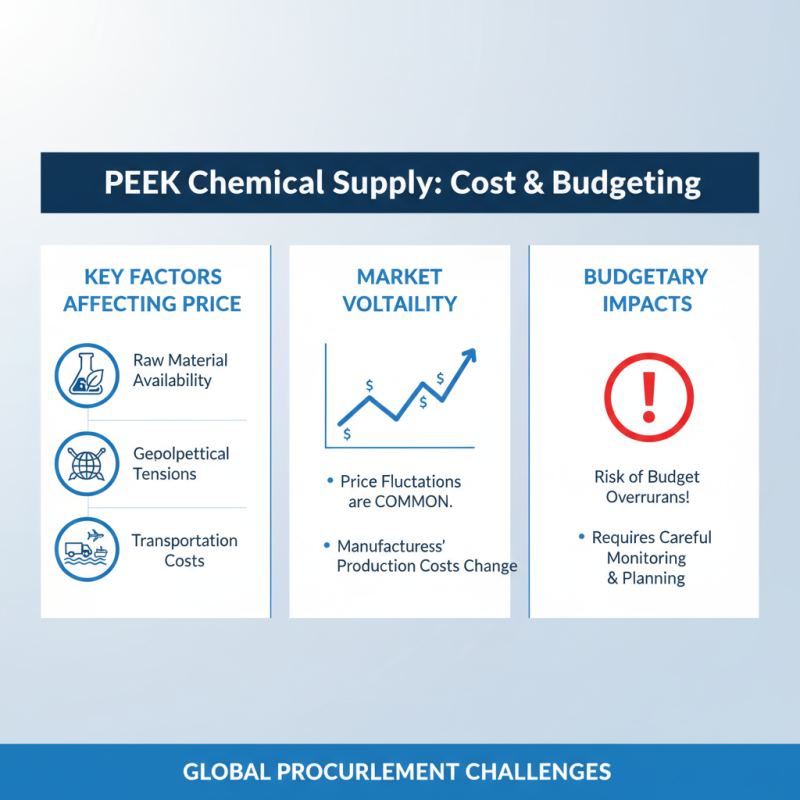
When sourcing Peek chemical for global procurement, cost considerations play a vital role. Understanding the price fluctuations in the market is essential. Various factors affect pricing, including raw material availability, geopolitical tensions, and transportation costs. Manufacturers may face changes that impact their production costs. This volatility can lead to budget overruns if not carefully monitored.
Establishing a comprehensive budgeting plan can help mitigate these risks. Identify potential suppliers and analyze their pricing structures. Consider long-term contracts to secure better rates and stability. However, it is crucial to assess suppliers' reliability. A cheaper supplier may lead to issues that can disrupt production. Quality should never be compromised for cost savings.
Building strong relationships with trusted suppliers can also aid in cost management. Open communication can lead to favorable terms and early notifications about price changes. Sometimes, revisiting contractual agreements may provide opportunities for renegotiation. Yet, it's essential to remain aware of the overall market trends. A regular market analysis can provide insights that are crucial for informed decision-making.
Navigating Logistics and Distribution Challenges in Global Sourcing
Navigating the logistics and distribution challenges in global sourcing of Peek chemicals requires a detailed understanding of various factors. The supply chain is often complex. Delays can occur at any stage. An effective strategy involves thorough planning and strong relationships with suppliers.
Transportation plays a critical role. Different modes of transport offer various benefits. Air freight is fast but costly. Sea transport is usually cheaper but slower. Companies must analyze their needs carefully. Local regulations can complicate logistics further. Understanding customs requirements is vital to avoid unexpected delays.
Weather and geopolitical issues can disrupt the supply chain. Firms must prepare for contingencies. Having alternative suppliers can mitigate risks. Flexibility in sourcing strategies aids in adapting to unforeseen challenges. Relying solely on one supply route can be dangerous. Diversifying sources provides security in uncertain times.