Huntersville, NC: (704) 992-8100     Putnam, CT: (860) 928-7911

China Top Composite Fibers Manufacturers and Suppliers?

China’s composite fibers sector serves industries that demand strength, low weight, and dependable performance. This guide introduces manufacturers and suppliers, while explaining what buyers should examine before requesting samples or quotations. The goal is practical comparison, not an unsupported ranking.

Materials scientist Michael F. Ashby’s reminder, “Materials are the stuff of design,” offers a useful lens for evaluating composite fibers. Fiber type, resin compatibility, surface treatment, and production consistency can all influence a finished part. A carbon fiber tow, for example, may look uniform on a datasheet yet behave differently when woven, infused, or cured. Small details matter.

The article will outline common fiber categories, supplier capabilities, quality documentation, customization, and export support. It will also consider where manufacturers serve applications such as wind-energy components, vehicles, sporting goods, and industrial equipment. Buyers should ask about traceability, test methods, lead times, and sample availability. A polished catalog is not proof of reliable production. Some supplier information may remain difficult to compare, and that deserves a closer look. No single checklist fits every project. Specifications, processing conditions, and end-use requirements vary. Treat this overview as a starting point, then verify claims directly with suppliers and qualified technical staff.

China Top Composite Fibers Manufacturers and Suppliers?

Understanding Composite Fibers and Their Industrial Applications

Understanding Composite Fibers and Their Industrial Applications

Composite fibers combine strong filaments, such as glass or carbon, with a resin matrix. The fibers carry much of the load; the resin holds them in place and helps transfer stress. The result can be a lightweight part with useful strength and corrosion resistance. That matters.

Wind turbine blades are a visible example. They must stay stiff under changing loads while remaining light enough to rotate efficiently. The Global Wind Energy Council’s Global Wind Report 2024 recorded 116.6 gigawatts of new wind capacity installed worldwide in 2023. That growth supports demand for blade materials, though it does not measure composite-fiber use directly.

Applications also include vehicle panels, pressure vessels, marine structures, and industrial equipment. Glass fiber is often selected where cost and corrosion resistance matter; carbon fiber can suit parts needing high stiffness at low weight. But material choice is not automatic. Repair, recycling, resin compatibility, and production quality all affect a component’s real environmental and economic value. A lighter part is not always the better part. Manufacturers should assess the full service life, not just the fiber’s strength on a datasheet.
Types of Composite Fibers Produced in China

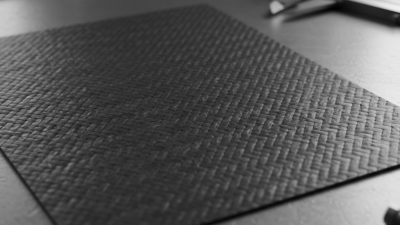
China’s composite-fiber supply base includes glass, carbon, aramid, basalt, and high-performance polyethylene fibers. Glass fiber is widely used in panels, pipes, and boat hulls because it offers useful strength at moderate cost. Carbon fiber is lighter and stiffer, making it suitable for sporting goods, transport parts, and industrial equipment. Aramid fibers resist impact and abrasion, while basalt fibers can provide heat resistance in selected applications. High-performance polyethylene fibers are valued for their low weight and tensile strength. Fiber properties vary by grade and processing method.

Tips: Match the fiber to the load, temperature, and exposure conditions. Ask for technical data, test methods, and sample parts. A neat datasheet helps, but it cannot replace testing in your actual design.

Chinese manufacturers and suppliers may offer fibers as yarn, woven fabric, chopped strands, or prepreg. These forms affect handling, resin compatibility, and final performance. Check fiber direction and laminate thickness before comparing quotations; two products with the same fiber name can behave differently. Also confirm consistency between sample and production batches. This takes time. There is no universal “best” fiber, and selecting one from price alone can lead to disappointing results.

Leading Composite Fiber Manufacturers and Suppliers in China

China’s leading composite fiber manufacturers and suppliers serve wind energy, transport, construction, and sporting-goods production. Their offerings commonly include carbon and glass fiber, woven reinforcement fabrics, prepregs, and pultruded profiles. The best fit depends on the application, not a broad “top supplier” label. Check fiber grade, tensile properties, resin compatibility, batch traceability, and test documentation. Ask for samples and inspect how consistently the fibers handle during cutting and lay-up. Small differences matter.

Market data signals continued demand, but it does not verify any individual supplier. MarketsandMarkets’ 2024 carbon-fiber market report estimates global value at about USD 5.5 billion in 2024, with growth projected through 2029. The Global Wind Energy Council reported 117 GW of new wind capacity installed worldwide in 2023, a sector that uses composite materials in turbine blades. For China-based sourcing, compare production capacity, lead times, quality-control records, and export experience. Request recent test results tied to the exact product specification. A polished catalogue is not enough. Supplier claims can be uneven, and that deserves a closer look.

Manufacturing Capabilities and Quality Standards

China’s composite-fiber suppliers may offer pultrusion, filament winding, prepreg lay-up, and resin infusion. Capabilities vary by factory. MarketsandMarkets estimated the global composites market at USD 93.6 billion in 2023, projecting USD 130.5 billion by 2028. That growth raises expectations for stable output, not just larger production lines. Buyers should check whether a supplier can repeat the same fiber alignment, resin ratio, and curing cycle across multiple batches.

Quality checks should match the intended use. ASTM D3039 provides a method for measuring tensile properties of polymer-matrix composite materials. ISO 9001 can support consistent quality-management processes, but certification alone cannot confirm product performance. Ask for recent test reports, resin-batch traceability, cure records, and details on inspection frequency. A small sample can look excellent; full-scale production may still reveal voids or uneven thickness. This gap deserves attention.

Tips: Request a sample made with the proposed production process, then compare its test results with the specification. Check how defects are recorded and corrected. Clear records matter. A supplier’s stated capability is useful, but documented repeatability is more convincing.

China Composite Fiber Suppliers: Manufacturing Capabilities and Quality Standards

This comparison is a sourcing guide, not a ranked list of named companies. Capabilities vary by facility and product grade; verify each supplier’s equipment, test scope, certificates, and production records. The standards below apply to relevant composite materials or management systems, as indicated, and should not be assumed to cover every product.

Material or Product Category Typical Manufacturing Capabilities Useful Quality Checks Relevant Standards or References Supplier Evidence to Request
Carbon fiber reinforcement Continuous tow, woven fabric, unidirectional tape, and, where offered, prepreg conversion. Composite part production may use processes such as filament winding, pultrusion, or autoclave molding. Fiber tensile properties, tow or fabric consistency, areal weight, resin content for prepreg, and laminate void or dimensional checks. ASTM D3039/D3039M or ISO 527-4/-5 for tensile testing of applicable fiber-reinforced plastic specimens; ASTM D7264/D7264M or ISO 14125 for flexural testing. Product and lot specifications; test reports identifying specimen type and conditioning; prepreg storage and shelf-life controls, if applicable; traceability from lot to shipment.
Glass fiber reinforcement Continuous filament yarn, roving, chopped strands, woven or stitched fabrics, and reinforcement formats used in processes such as pultrusion, molding, and filament winding. Filament or yarn consistency, sizing compatibility, roving linear density, fabric construction and areal weight, and mechanical tests on representative composite laminates. ASTM D3039/D3039M or ISO 527-4/-5 for tensile testing of applicable composite specimens; ASTM D2344/D2344M for short-beam strength of applicable composite materials. Reinforcement specification and sizing information; lot-level inspection records; test method details; evidence that the selected sizing is suitable for the intended resin system.
Aramid fiber reinforcement Continuous yarn and, depending on the supplier, woven fabric, cord, or other reinforcement formats for composite or protective applications. Yarn or fabric consistency, tensile properties using a suitable method, moisture and handling controls, and performance testing of the finished composite where relevant. ASTM D3039/D3039M or ISO 527-4/-5 may be used for tensile testing of applicable composite specimens; confirm that the chosen method and specimen configuration fit the product. Fiber and fabric technical data; application-specific test reports; storage and handling guidance; documentation of any surface treatment or finish.
Thermoplastic composite reinforcement Thermoplastic tapes, organosheets, or fiber-reinforced compounds may be produced or converted using consolidation, lamination, extrusion, or molding equipment, depending on the product. Fiber content, thickness and dimensional tolerance, void content, tensile and flexural properties, and process consistency across production lots. ISO 527-4/-5 or ASTM D3039/D3039M for applicable tensile specimens; ISO 14125 or ASTM D7264/D7264M for applicable flexural specimens. Material composition and processing window; conditioning and test details; dimensional inspection results; evidence of repeatability across multiple production lots.
Prepreg and resin-impregnated reinforcement Resin impregnation and controlled-width rolls or sheets, when included in the supplier’s scope. Product formats and cure systems depend on the resin and end-use requirements. Resin content, volatile content where specified, tack or flow characteristics, thickness, cure behavior, and finished-laminate properties. ASTM D3039/D3039M and ASTM D7264/D7264M can be used for relevant cured composite specimens; test conditions and specimen preparation should be agreed in advance. Batch certificate, resin and fiber identification, storage temperature requirements, shelf-life and out-time limits, cure schedule, and test reports for the agreed laminate configuration.
Quality and environmental management Documented inspection, nonconformance handling, corrective actions, equipment calibration, supplier controls, and environmental management may be part of a facility’s management system. Calibration status, incoming and in-process inspection records, traceability, nonconformance closure, and monitoring of agreed product-specific acceptance criteria. ISO 9001 addresses quality management systems; ISO 14001 addresses environmental management systems. Certification is facility- and scope-specific and does not itself certify a product. Current certificates and their scope, issuing certification body, covered manufacturing site, audit or surveillance status, and product-specific inspection and test records.

How to Select a Chinese Composite Fiber Supplier

China Top Composite Fibers Manufacturers and Suppliers?

How to Select a Chinese Composite Fiber Supplier

Choosing a Chinese composite fiber supplier takes more than comparing quoted prices. Start by defining the fiber type, grade, weave or filament format, and intended process. Ask whether the supplier manufactures the fiber or processes material from another source. Request current technical data, including tensile strength, modulus, sizing, and lot tolerances. A capable supplier should explain how these figures are tested. A polished sample is useful, but repeatable quality matters more.

Check how the supplier controls incoming materials, production batches, and final inspection. Ask for traceability records and realistic lead times, then compare the answers with your own production schedule. For critical parts, test a sample using your actual resin and process conditions. Independent testing may help confirm results. Also agree in writing on specifications, packaging, change notifications, and how quality issues will be handled. A website alone proves little. If an onsite visit is not practical, request a live production walkthrough and dated quality records. Even then, some uncertainty remains; a pilot order can reveal problems before larger purchases.

Tips: Send each candidate the same specification. Compare test data, not marketing language. Keep a labeled sample from every approved lot.