How to Use Polyetheretherketone in Advanced Engineering Applications?
In the realm of advanced engineering, polyetheretherketone (PEEK) has emerged as a crucial material. Engineers highly regard its strength and heat resistance. Dr. Sarah Jenkins, a leading expert in polymer technology, emphasizes the potential of PEEK in her statement: "Polyetheretherketone could revolutionize high-performance applications." This sentiment reflects an evolving landscape in engineering materials.
As industries seek more durable and efficient solutions, polyetheretherketone stands out. Aerospace, medical devices, and automotive sectors increasingly rely on its unique properties. However, while PEEK offers tremendous benefits, its high cost can be a barrier for some applications. Engineers must weigh these factors carefully. Testing and innovation remain vital to maximize its effectiveness in real-world scenarios.
Nevertheless, challenges with fabrication and material processing persist. These challenges remind us that while PEEK is promising, it is not without limitations. The journey to fully harness polyetheretherketone's capabilities requires ongoing research and collaboration across disciplines. The path is complex, yet the potential rewards are significant.
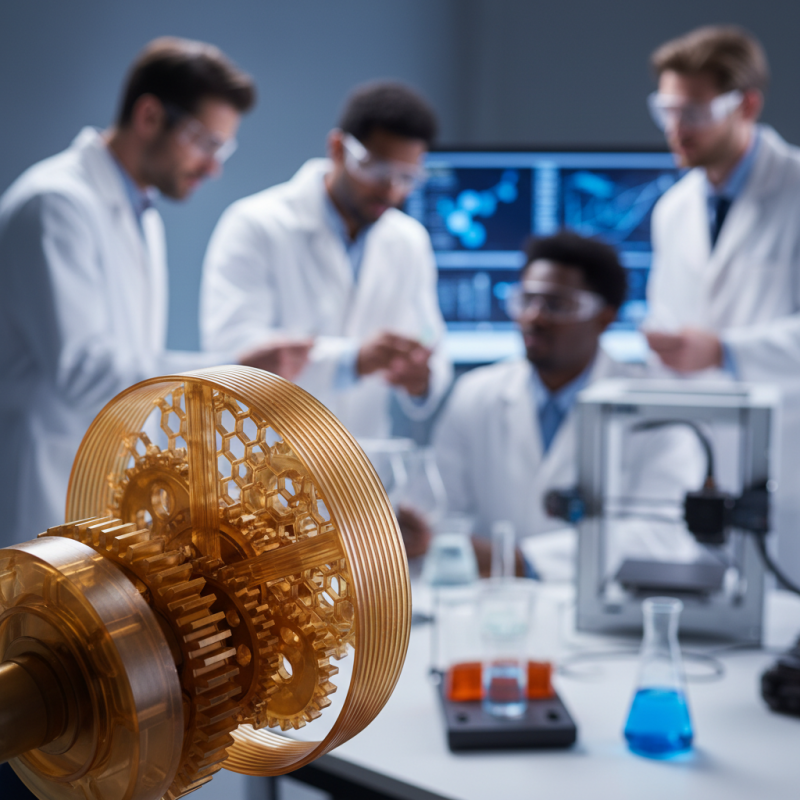
Polyetheretherketone: Overview of Its Properties and Applications
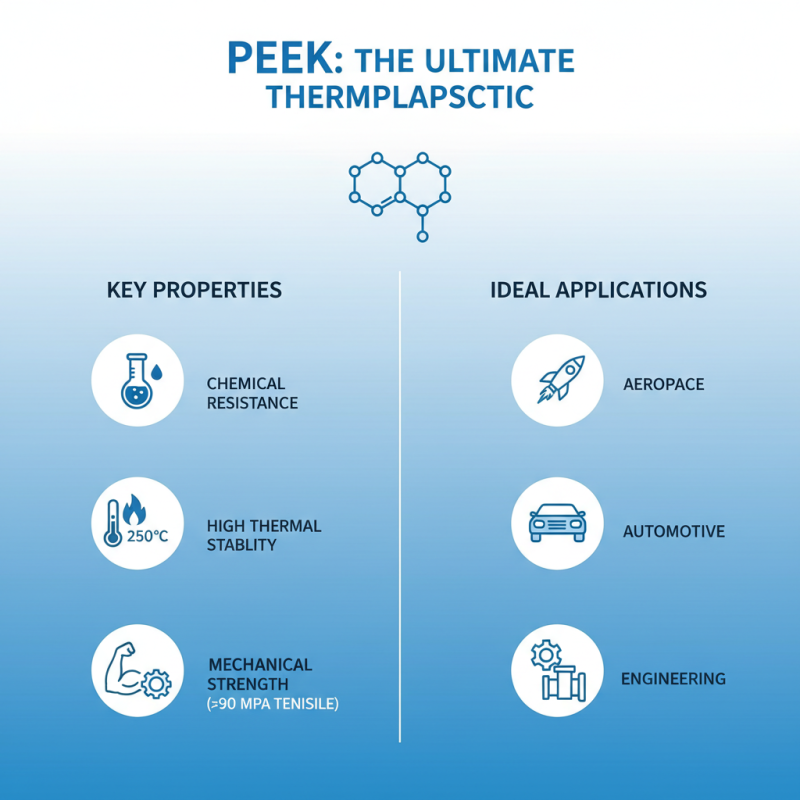
Polyetheretherketone (PEEK) is a high-performance thermoplastic known for its exceptional properties. This polymer features remarkable chemical resistance, high thermal stability, and impressive mechanical strength. Studies show that PEEK can withstand temperatures up to 250 degrees Celsius. This makes it ideal for demanding engineering applications. Its tensile strength can reach over 90 MPa, which is crucial in industries like aerospace and automotive.
Another important aspect is PEEK's versatility in applications. It is frequently used in manufacturing components that require durability and performance. For instance, in the medical field, PEEK is utilized for surgical instruments and implants. The biocompatibility of PEEK is vital. Data indicates that it has a lower risk of causing adverse reactions in the body. However, the challenges of processing PEEK can be significant. The material requires specialized machinery for proper shaping and forming.
Moreover, the cost of PEEK can be high compared to other polymers. This poses a dilemma for engineers. Balancing performance and budget can be tricky. While PEEK offers superior properties, its price can limit its application in some projects. As industries evolve, it may be necessary to explore alternative materials or new processing techniques. Continuous innovation is essential for maximizing PEEK's potential in advanced engineering applications.
Mechanical Properties of PEEK and Their Impact on Engineering Design
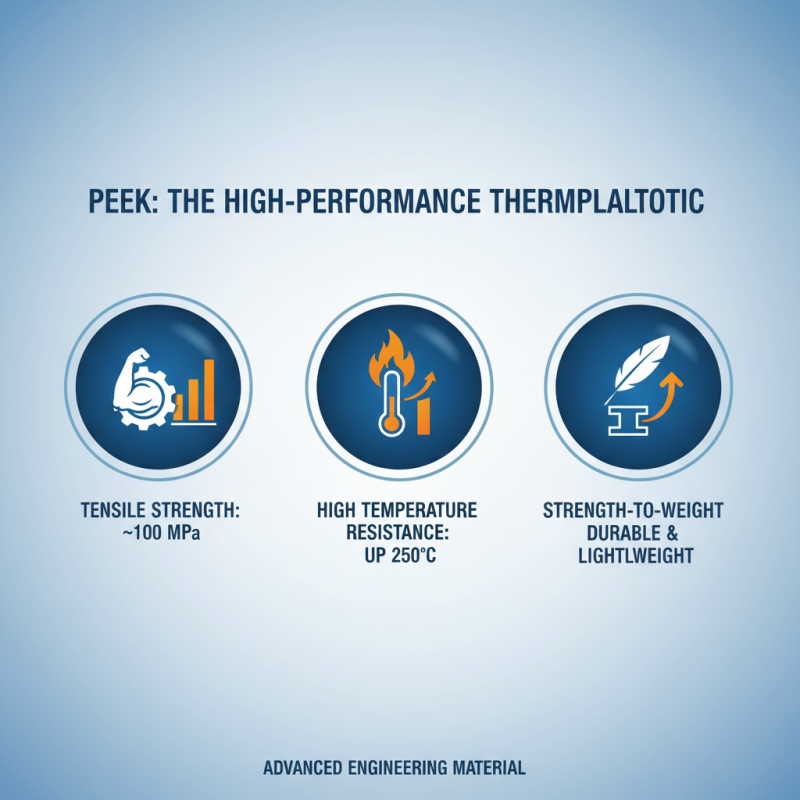
Polyetheretherketone (PEEK) is gaining traction in advanced engineering due to its unique mechanical properties. This high-performance thermoplastic boasts a tensile strength of approximately 100 MPa. It can endure high temperatures up to 250°C, making it suitable for extreme conditions. Its strength-to-weight ratio is appealing for projects demanding lightweight materials without compromising durability.
In applications such as aerospace and automotive sectors, the mechanical properties of PEEK significantly influence design choices. For instance, when substituting metals, designers face challenges like thermal expansion differences. PEEK's low thermal conductivity, around 0.25 W/mK, complicates heat management. Engineers must consider these aspects during the design phase.
Moreover, PEEK's chemical resistance adds another layer of complexity. It withstands numerous solvents and acids but may degrade with continuous UV exposure. This requirement complicates outdoor application designs. Designers need to reflect on these factors while optimizing for longevity and performance in harsh environments. Balancing these mechanical properties is vital when pushing PEEK's limits in engineering design.
Thermal Stability and Chemical Resistance of PEEK in Harsh Environments
Polyetheretherketone (PEEK) is gaining attention in advanced engineering applications. Its thermal stability is remarkable, allowing it to endure continuous temperatures of up to 260°C. This property is crucial in aerospace and automotive industries. In many extreme environments, materials fail due to heat exposure. However, PEEK remains dimensionally stable, which is a significant advantage.
Chemical resistance is another critical factor. In studies, PEEK shows resistance to aggressive solvents and chemicals. Reports highlight its performance even against acids and bases, making it suitable for chemical processing applications. For instance, a recent analysis showed that PEEK retains over 80% of its strength after exposure to harsh chemicals for extended periods.
Despite these strengths, PEEK has limitations. Its higher cost compared to alternative materials can be a barrier. Also, its processing often requires special equipment, which may not be readily accessible in all facilities. Understanding these challenges is essential for engineers considering PEEK for specific applications. As the industry evolves, addressing these issues will be vital for maximizing PEEK’s potential in demanding environments.
Thermal Stability and Chemical Resistance of PEEK in Harsh Environments
Comparison of PEEK with Other Advanced Polymer Materials in Engineering
Polyetheretherketone (PEEK) stands out among advanced polymers due to its unique properties. It boasts high thermal stability, capable of withstanding temperatures above 250°C. This is unmatched by many engineering polymers, such as polyamide and polycarbonate. PEEK maintains its mechanical strength at elevated temperatures, making it ideal for applications in aerospace and automotive industries.
Compared to traditional materials, PEEK offers superior chemical resistance. For instance, it can endure harsh chemicals, oils, and solvents without degradation. In a recent industry report, PEEK showed a 90% retention of its mechanical properties after exposure to automotive fluids. Other polymers like polyimide and nylon often fail under similar conditions.
Despite its advantages, the cost of PEEK remains a concern. It is more expensive than many alternatives, limiting its widespread use. Additionally, machining PEEK can present challenges. The production process requires careful attention to maintain its integrity. Engineers often need training and experience to handle this material effectively. These factors lead to a need for deeper analysis before selecting PEEK for specific applications.
How to Use Polyetheretherketone in Advanced Engineering Applications? - Comparison of PEEK with Other Advanced Polymer Materials in Engineering
| Material |
Tensile Strength (MPa) |
Flexural Modulus (GPa) |
Heat Deflection Temperature (°C) |
Applications |
| PEEK |
90-100 |
4.1-4.3 |
160-200 |
Aerospace, Medical, Automotive |
| PTFE |
20-30 |
0.5-0.7 |
260 |
Seals, Gaskets, Electrical Insulation |
| ABS |
40-60 |
2.0-2.5 |
90 |
Consumer Goods, Automotive Parts |
| Nylon 6/6 |
70-80 |
3.0-3.5 |
110-180 |
Textiles, Bulk Containers, Automotive |
Case Studies: Successful Applications of PEEK in Aerospace and Medical Fields
Polyetheretherketone (PEEK) has emerged as a game-changer in advanced engineering. In aerospace, it is often used for lightweight components. For instance, parts made from PEEK demonstrate exceptional strength. This enhances fuel efficiency and reduces overall weight. However, the manufacturing process can be complex and costly. Some engineers may struggle with the machining of PEEK due to its toughness.
In the medical field, PEEK’s biocompatibility is highly valued. Surgical implants made from PEEK allow for better integration with human tissue. They can also withstand sterilization processes. Yet, there are challenges. Not all PEEK products achieve the same quality. Variations in thermal properties and dimensional stability can occur. Engineers need to ensure stringent quality controls. Despite these hurdles, successful case studies highlight PEEK's potential.
A notable example is its use in cranial implants. These implants offer better performance than traditional materials. Patients report fewer complications and faster recovery times. However, continuous research is essential. The industry must keep refining techniques to fully leverage PEEK’s advantages. Balancing innovation, quality, and costs remains a critical area for improvement.