
Huntersville, NC: (704) 992-8100     Putnam, CT: (860) 928-7911

What Is a PTFE Elgiloy Lip Seal?

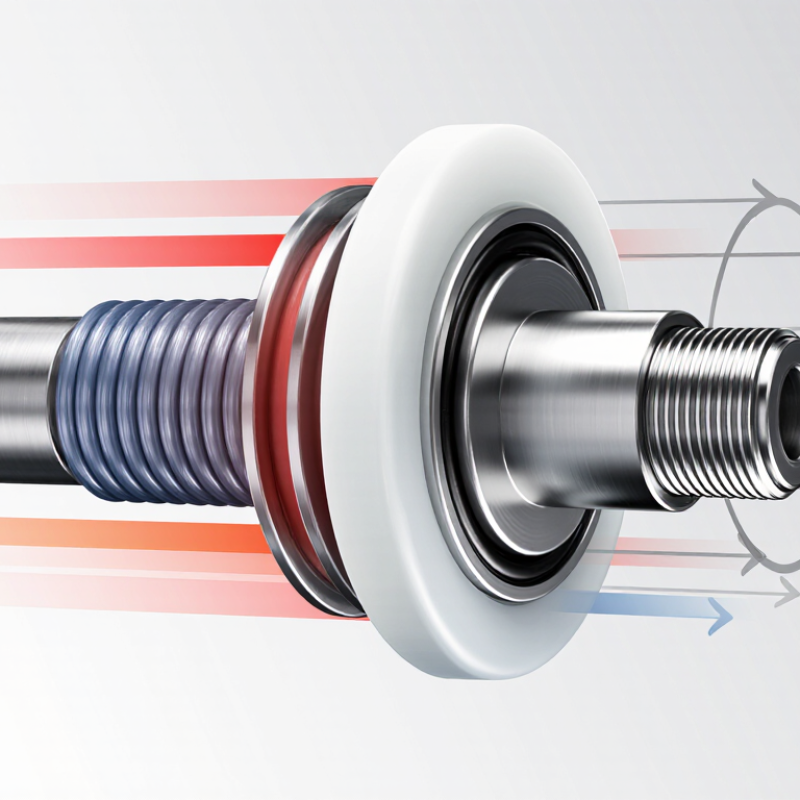
A Ptfe Elgiloy Lip Seal combines a low-friction PTFE sealing element with an Elgiloy metal energizer or spring. This design supports reliable sealing in rotating equipment, especially where temperature, chemical exposure, and shaft movement challenge ordinary elastomers. PTFE resists many aggressive media and offers stable sliding performance. Elgiloy contributes spring strength and corrosion resistance.

It is not a magic part. Its performance depends on shaft finish, pressure, temperature, installation quality, and lubricant compatibility. A polished shaft can reduce wear, while a damaged surface may cut the lip during operation. Small details matter. So does cleanliness.

Tribology expert Dr. Bharat Bhushan describes the field as “the science and engineering of interacting surfaces in relative motion.” That principle explains why this seal deserves careful evaluation. The PTFE lip touches the shaft continuously, while the Elgiloy element maintains contact pressure as conditions change. Designers must consider friction, heat generation, leakage paths, and material behavior together.

A proper introduction should also admit uncertainty. A Ptfe Elgiloy Lip Seal may perform exceptionally in one application and fail early in another. The difference may involve pressure spikes, shaft runout, incorrect storage, or an unsuitable lip geometry. Product data should therefore be checked against actual operating conditions. Independent testing and manufacturer guidance remain important. This article examines the seal’s structure, operating principle, material advantages, limitations, and practical selection factors. It focuses on engineering evidence rather than broad promises.
What Is a PTFE Elgiloy Lip Seal?

PTFE Lip-Seal Fundamentals: Low Friction and Service Temperatures to 260°C

What Is a PTFE Spring-Energized Lip Seal?

PTFE Lip-Seal Fundamentals: Low Friction and Service Temperatures to 260°C

A PTFE spring-energized lip seal uses a flexible PTFE sealing jacket and an internal metal energizer. The spring keeps the lip against the shaft when pressure changes or the equipment stops. This design suits rotating shafts, plungers, and reciprocating rods.

Low friction is a major advantage. A properly finished shaft can reduce start-up resistance and limit heat generation. In practical seal evaluations, small scratches often matter more than expected. Even a strong PTFE compound may leak across a damaged running surface. Clean assembly is essential. A dry, sharp edge can cut the lip.

Some designs are rated for service temperatures up to 260°C. That value is conditional, not universal. Media type, pressure, speed, spring material, and exposure time all affect performance. At elevated temperatures, PTFE can expand and lose helpful contact pressure. The energizer compensates for part of this movement, but not every design responds equally.

I would avoid choosing a seal from temperature alone. Check the actual shaft speed, pressure direction, surface finish, and chemical environment. Brief peaks may be acceptable, while continuous heat can shorten service life. This is where specifications sometimes feel incomplete. Testing the seal under real operating conditions remains the safer engineering decision. A slightly higher friction seal may perform better if it survives the full temperature cycle.

Elgiloy Spring Energizers: Cobalt-Alloy Strength Exceeding 1,000 MPa

What Is a PTFE Lip Seal with a Cobalt-Alloy Spring?

A PTFE lip seal uses a spring energizer to maintain contact against a shaft or housing. The spring sits behind the sealing lip. As pressure changes, it helps preserve sealing force. This matters when PTFE loses some elasticity during installation or service.

Cobalt-alloy spring energizers are selected for strength, fatigue resistance, and temperature stability. Some grades can exceed 1,000 MPa in tensile strength. That strength supports reliable lip loading in demanding equipment. It also helps the seal tolerate vibration, pressure cycling, and small shaft movements.

In practical inspections, the spring must match the operating environment. Chlorine compounds, acids, and high temperatures may affect alloy performance. Do not judge compatibility from strength alone. Check temperature, pressure, shaft speed, and chemical exposure together. Installation details matter too. A scratched sealing surface can cause leakage, even with an excellent spring.

The design is not foolproof. A stronger energizer cannot correct poor groove dimensions or an incorrectly sized seal. Engineers should verify spring load after compression and inspect the lip for distortion. PTFE may appear undamaged while its sealing edge has relaxed. That detail is easy to miss. Testing under real pressure often reveals problems that bench inspection cannot.

How PTFE and Elgiloy Create a Pressure-Activated Sealing System

What Is a PTFE Elgiloy Lip Seal?

A PTFE Elgiloy lip seal combines a low-friction polymer lip with a resilient metal energizer. PTFE helps the seal slide smoothly against a shaft or bore. It also resists many chemicals and performs across demanding temperature ranges. Elgiloy supports the lip when pressure, vibration, or movement challenges contact.

The sealing action is pressure activated. At low pressure, the spring maintains light contact between the lip and mating surface. As system pressure increases, fluid enters behind the sealing lip. That pressure pushes the lip more firmly against the surface. Contact pressure rises where leakage could begin. Simple in principle.

Installation still matters. A scratched shaft, sharp edge, or contaminated groove can damage the lip. Surface finish and alignment deserve careful inspection. The seal may reduce friction, but it cannot correct poor hardware design. Engineers should verify pressure, temperature, speed, chemical exposure, and extrusion risk before selection. Real testing is wiser than relying only on a catalog chart. One detail is easy to miss: pressure activation can improve sealing while also increasing friction. That trade-off needs measurement.

What Is a PTFE Elgiloy Lip Seal?

How PTFE and Elgiloy create a pressure-activated sealing system

This chart shows the calculated pressure-induced force acting on a 100 mm² effective sealing-lip area. As pressure increases, PTFE is pressed more firmly against the mating surface, while the Elgiloy spring element helps maintain lip contact and sealing resilience. The values represent force calculated from pressure × area, not a guaranteed leakage or service-performance rating.

Key Design Limits: Pressure, Speed, Temperature, and Chemical Compatibility

A PTFE Elgiloy lip seal combines a low-friction PTFE sealing element with a corrosion-resistant nickel-cobalt alloy spring. The spring maintains contact as pressure, temperature, and shaft movement change. In practice, the seal is not limited by PTFE alone. Spring force, lip geometry, shaft finish, and heat removal also control performance.

Pressure must remain modest unless the lip has mechanical support. ISO 6194-1 defines rotary lip seal terminology and installation principles, but it does not guarantee one pressure rating. Many engineering designs stay near 0.3 bar without a backup ring. Higher pressure can deform the lip and create leakage. Shaft speed also matters. A practical screening value is often 5–10 m/s, although the allowable value depends on pressure and lubrication. Watch the PV relationship. Pressure and velocity multiply heat generation.

PTFE commonly supports continuous service near 260°C, according to widely used material data from ASTM-based testing and engineering handbooks. Real seals may require lower limits because springs, housing materials, and lubricants degrade earlier. Chemical compatibility is broad, but molten alkali metals, fluorine, and some high-energy oxidizers remain serious concerns. Check immersion data, not only a compatibility chart. A small scratch can matter more than a perfect laboratory result. Installation records should include shaft roughness, runout, temperature, pressure, speed, and lubricant. One overlooked variable can invalidate an otherwise careful design.

Industry Qualification: Leakage, Wear, and Testing Under ISO 3601 Standards

A PTFE lip seal uses a chemically resistant polymer sealing lip and a spring energizer made from a cobalt-based alloy. The spring maintains contact when pressure, temperature, or shaft movement changes. This design suits demanding hydraulic and pneumatic equipment.

Industry qualification must examine leakage, wear, and installation sensitivity. ISO 3601 defines important O-ring dimensions, tolerances, and inspection practices. It does not fully qualify every PTFE lip seal. For this reason, engineers often use ISO 3601 methods as a reference while adding seal-specific procedures.

Leakage testing should record pressure, temperature, shaft speed, and test duration. A dry shaft can create misleading results. So can excessive lubricant. Inspectors should measure leakage before and after thermal cycling, pressure pulses, and repeated reciprocation. Transparent fixtures can reveal a thin fluid track that a simple weight measurement may miss.

Wear testing needs more than a final visual check. Microscopy can identify lip rounding, scoring, transfer film, or spring exposure. Dimensional checks should confirm that the seal and groove remain within the specified limits. Small assembly damage matters.

Real test data is rarely perfect. One sample may leak early without representing the whole batch. That result still deserves investigation. Repeat testing, controlled surface roughness, and documented operator technique improve reliability, although they cannot remove every uncertainty.