Why Choose a Commercial Food Sealer Machine?
Why Choose a Commercial Food Sealer Machine?
Food businesses face a practical challenge: keeping products protected while managing labor, packaging costs, and avoidable waste. The United Nations Environment Programme’s Food Waste Index Report 2024 estimates that 1.05 billion tonnes of food were wasted worldwide in 2022, including waste at retail and food-service levels. The U.S. Department of Agriculture has also estimated that 30–40% of the U.S. food supply is lost or wasted. These figures do not prove that sealing alone prevents waste. They do show why better handling and storage deserve attention.
A Commercial Food Sealer Machine can help create consistent package seals for products such as sliced meat, cheese, prepared meals, or dry ingredients. Picture a busy prep area: staff portion food, place it in compatible bags, and seal each pack with repeatable pressure and timing. That consistency may support orderly storage and reduce exposure to air, moisture, and handling. Results depend on the food, packaging material, machine settings, and storage conditions. A sealer is not magic.
Choosing the right equipment means looking beyond the purchase price. Consider throughput, sealing width, package size, cleaning needs, staff training, and access to maintenance. Industry reports identify substantial food waste, but they cannot determine which machine suits a particular kitchen or production line. That takes careful evaluation. A useful decision starts with actual packaging volumes and product requirements, then compares machines against them. Small details matter. Even a reliable machine can disappoint when its bags, settings, or workflow do not match the operation.
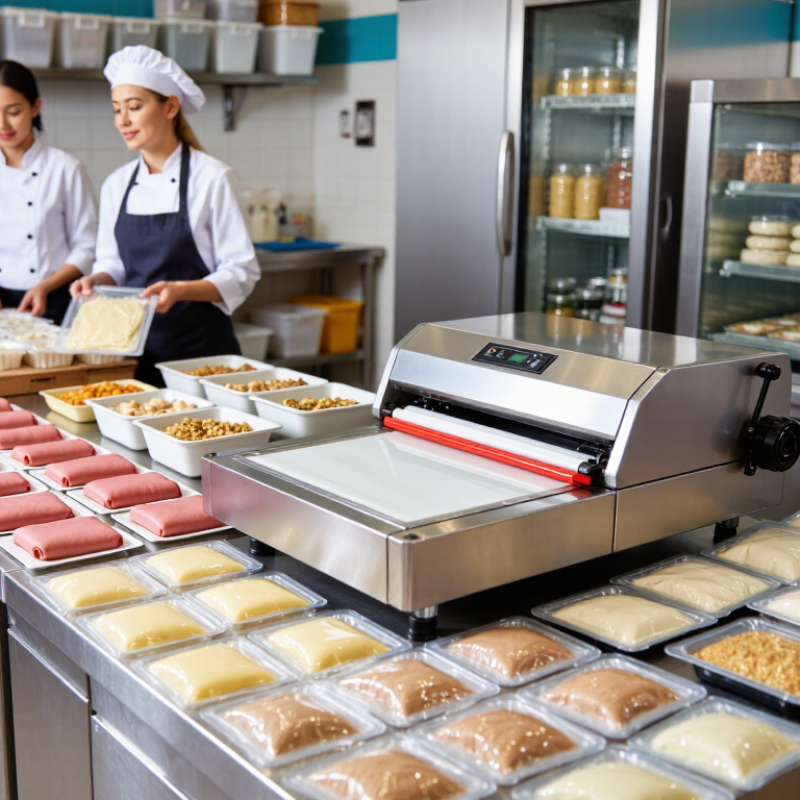
What Is a Commercial Food Sealer Machine?
What Is a Commercial Food Sealer Machine?
A commercial food sealer machine closes food packages using heat, pressure, or air removal. Common types include impulse heat sealers, continuous band sealers, and vacuum sealers. A small café may seal individual portions, while a processing room might run bags across a conveyor. The right machine depends on package material, product moisture, daily volume, and the closure required.
With a vacuum model, the machine draws air from a compatible pouch before sealing it. A heat sealer closes a bag without necessarily removing air. That difference matters: vacuum packaging can suit some chilled foods, but it does not replace refrigeration or safe handling. The FAO’s 2023 report, The State of Food and Agriculture, estimated that 13.2% of food was lost between harvest and retail in 2021. That figure covers many causes, not packaging alone. A reliable seal may help limit leaks and exposure, but it cannot fix poor storage.
In practice, operators should check seal strength, temperature settings, and pouch compatibility. A wrinkled edge can leave a channel for air or liquid. Small details matter. Cleaning and routine checks also affect consistent performance, especially during long production shifts. Even a well-matched machine can disappoint if staff rush the loading step.
How Commercial Food Sealing Works
Why Choose a Commercial Food Sealer Machine?
How Commercial Food Sealing Works
A commercial food sealer closes packaging by applying controlled heat, pressure, or both. The exact cycle depends on the machine, film, and food being packed. In a heat sealer, heated jaws press the packaging layers together for a set time. Too little heat can leave a weak seam; too much may wrinkle or damage the film. Small changes matter.
In a vacuum chamber model, an operator places filled pouches inside the chamber and closes the lid. The machine removes air, then heated bars seal the pouch edges. After the chamber returns to normal pressure, the sealed package can be removed. Some products need little or no air removal, so a standard heat-sealing cycle may be more suitable.
Operators should check seals throughout a production run, not just at startup. A practical check includes looking for folds, gaps, or food caught in the seam. Staff can also test sample packages according to their quality procedures. A neat seam is not always a strong one. Packaging material, seal temperature, and product residue all affect the result, and settings may need adjustment between batches. That part is easy to overlook.
Why Choose a Commercial Food Sealer Machine?
How Commercial Food Sealing Works
In a chamber vacuum sealer, air is drawn from the bag before the opening is heat-sealed. This chart shows the approximate composition of dry air being removed—not the final atmosphere inside the sealed package. Actual residual air depends on the machine, product, and sealing conditions.
How Sealing Helps Protect Food Quality and Safety
In a busy kitchen, an open bag of grated cheese can pick up moisture, odors, and stray crumbs. A commercial food sealer machine helps close packages consistently, limiting exposure to air and reducing spills during storage. Less air can also slow oxidation, which may dull color or flavor in foods such as nuts, coffee, and cut produce. The results depend on the food and packaging. Sealing is not a cure-all.
For food safety, a sound seal helps keep outside contaminants from entering an unopened package and reduces leaks between stored items. But sealing does not kill bacteria or make mishandled food safe. Keep chilled foods cold, clean work surfaces, and follow suitable storage times. Vacuum-packed foods may need careful temperature control because removing air does not remove every food-safety risk.
The details matter. Use bags designed for the sealer, keep the sealing area dry, and leave enough clean material above the food for a flat seam. Check the finished edge for gaps, wrinkles, or trapped crumbs. A quick tug test can reveal a weak closure. Staff should also record packaging dates and inspect stored packs regularly; even a neat-looking seal can fail.
Why Choose a Commercial Food Sealer Machine? - How Sealing Helps Protect Food Quality and Safety
| Sealing Approach | How It Works | Potential Quality Benefits | Suitable Uses | Important Considerations |
| Vacuum sealing | Removes much of the air from a compatible package before sealing it. | Can reduce exposure to oxygen, which may slow oxidation and help limit freezer burn when packaging and storage are appropriate. | Portioned meats, cheeses, and other foods suited to vacuum packaging. | Vacuum packaging does not sterilize food. Perishable foods still require safe refrigeration or freezing and careful handling. |
| Heat sealing | Uses heat and pressure to join compatible packaging layers and close the package. | A sound seal helps keep out contaminants and moisture and helps prevent leaks during storage and handling. | Dry goods, snacks, powders, and products packed in heat-sealable film or pouches. | Seal integrity depends on the packaging material, clean sealing surfaces, and suitable time, temperature, and pressure settings. |
| Modified-atmosphere packaging (MAP) | Replaces or adjusts the air inside a package with a selected gas mixture before sealing. | For suitable products, the gas mixture and package barrier can help slow quality changes and support shelf-life goals. | Packaged fresh foods such as meat, poultry, seafood, produce, and bakery products, depending on the product and process. | Gas selection, film properties, product characteristics, and temperature control must be appropriate; MAP is not a substitute for food-safety controls. |
| Tray lidding | Seals a film lid to the rim of a tray, with or without a modified atmosphere. | Helps contain the product and reduce exposure to handling and environmental contamination while the seal remains intact. | Prepared meals, fresh-cut foods, and portioned products sold in trays. | The tray and lidding film must be compatible, and seals should be checked for wrinkles, food residue, or other defects. |
| Commercial sealing equipment | Provides a repeatable process for closing packages at a production or food-service scale. | Consistent sealing can help protect package integrity, support portion control, and reduce avoidable leaks or product waste. | Food processors, commercial kitchens, caterers, and other operations that package food regularly. | Choose equipment for the product, package format, throughput, and cleaning needs. Follow applicable food-safety requirements and validate the process. |
Note: Sealing helps protect packaged food but does not make food sterile or eliminate the need for proper hygiene, temperature control, storage, and handling.
How a Sealer Can Improve Efficiency and Reduce Waste
Why Choose a Commercial Food Sealer Machine?
How a Sealer Can Improve Efficiency and Reduce Waste
A commercial food sealer can make portioning and storage more consistent during a busy shift. Staff can seal prepared ingredients in labeled bags instead of relying on loosely covered trays. Removing excess air can help protect food quality and reduce freezer burn, when the packaging and storage conditions are suitable. Sealed portions also stack neatly, freeing space in crowded refrigerators. Small gains add up. A sealer will not prevent spoilage if food is handled or chilled incorrectly, so safe storage practices still matter.
Tips: Match the bag material to your machine and the food being packed. Keep the sealing area dry and free of crumbs. Test a few packages at the start of a shift, then check the seams for gaps or wrinkles.
Efficiency depends on the workflow, not just the equipment. Group similar items, prepare labels before packing, and set clear portion sizes. This can reduce repeated measuring and make stock rotation easier. For example, dated bags of soup base are simpler to count than unlabeled containers. Track discarded food for a few weeks to see whether waste actually falls. One honest drawback: sealing takes time, and awkwardly shaped foods may need extra handling. Review the process with staff and adjust it where it slows them down.
What to Consider When Choosing a Commercial Sealer
Choosing a commercial food sealer starts with the products you pack, not the machine’s advertised speed. A small café sealing soups has different needs from a bakery packing dry goods. Check the bag materials and sizes you use, then confirm the sealer supports them. Some machines handle only specific film types or thicknesses.
Match capacity to your busiest realistic shift. A tabletop unit may suit a few dozen packages a day, while continuous production may call for a conveyor-style system. Look at seal width, temperature control, and cycle time. For vacuum models, test how they handle moist foods; liquid near the seal can cause weak closures. Test real products.
Cleaning and operator comfort matter during long shifts. Smooth surfaces and accessible sealing bars can make daily wipe-downs easier. Controls should be clear enough that staff can repeat settings without guesswork. Ask about replacement parts and routine maintenance, too. A fast machine can still slow a line if its bar needs frequent adjustment.
It is easy to overvalue speed. A rough estimate of daily volume can be wrong, especially during seasonal peaks, so leave some capacity headroom. Request a sample run with your actual bags and products. Watch for wrinkles, incomplete seals, and awkward loading. Small details matter. The best fit is the one your team can operate consistently and maintain with the space and time available.
