Huntersville, NC: (704) 992-8100     Putnam, CT: (860) 928-7911

What Is PEEK and What Are Its Key Characteristics?

Polyether ether ketone (PEEK) is a high-performance thermoplastic used where heat, wear, or chemical exposure can challenge ordinary polymers. Its structure gives it a useful combination of strength, stiffness, and resistance to many chemicals. Yet the name alone does not guarantee a particular performance level. Grade, processing, reinforcement, and test conditions all matter.

The peek characteristics are easier to understand through measured values. Victrex’s VICTREX PEEK 450G technical data sheet reports a glass-transition temperature of about 143°C and a melting point of about 343°C. These figures help explain why PEEK can retain useful properties at elevated temperatures, but they are not service-life guarantees. Design conditions matter. A filled grade may behave quite differently from an unfilled one. PEEK also offers low moisture absorption and strong wear performance in many applications, making it relevant to components such as pump parts, electrical connectors, and lightweight bearings. Its limitations deserve equal attention: the material is relatively expensive, and processing typically requires specialized equipment and careful temperature control. That distinction is easy to miss. This overview examines what PEEK is, how its key properties are measured, and where those properties may—or may not—justify its use. It treats supplier datasheets as starting points, not universal design rules. For critical parts, engineers should verify the exact grade and consult application-specific test data.
What Is PEEK and What Are Its Key Characteristics?

What PEEK Is and How It Is Classified

PEEK stands for polyether ether ketone. It is a high-performance thermoplastic in the polyaryletherketone (PAEK) family. Its molecular backbone contains aromatic rings linked by ether and ketone groups. That structure helps explain its strength and heat resistance. It is not a thermoset: heat can soften it, allowing it to be processed again.

PEEK is generally classified as a semi-crystalline polymer. In practice, its crystallinity depends partly on cooling and processing conditions, so two parts made from the same polymer may behave differently. A review by Kurtz and Devine in Biomaterials (2007) reports a glass-transition temperature near 143°C and a melting temperature near 343°C. These are typical reference values, not guarantees for every formulation or finished component. That distinction matters.

Rae and colleagues’ 2007 review in Polymer examined PEEK’s mechanical behavior and showed why its properties need context: temperature and material structure affect performance. Below its glass-transition temperature, the polymer remains comparatively rigid; above it, molecular motion increases. The melting point marks a different transition, when crystalline regions melt. The numbers are useful, but incomplete. For real parts, engineers also consider processing history, load, and exposure conditions. A temperature figure alone cannot predict service life.

How PEEK’s Molecular Structure Determines Its Properties

PEEK’s molecular structure explains why it tolerates demanding heat. Its repeating unit combines aromatic rings with ether and ketone linkages. The rings and ketone groups stiffen the backbone; ether bonds allow limited chain movement. A useful balance. The regular structure also lets some chains pack into crystalline regions, while others remain amorphous.

That mixed morphology matters in service. Crystalline regions help resist chemicals and retain shape; the amorphous phase contributes toughness. CAMPUS polymer data and compiled material-property records place unfilled PEEK’s glass-transition temperature near 143°C and melting point near 343°C. These are characteristic values, not guarantees: grade, processing, and test conditions can shift measured results. Small differences matter.

The chemistry also explains a practical trade-off. PEEK can retain useful mechanical performance at elevated temperatures, but its high melting point demands controlled, high-temperature processing. ISO 11357 thermal-analysis methods help characterize transitions, yet a temperature figure alone cannot predict a component’s life. Geometry, load, and exposure time still count. The molecular structure sets the potential; real parts reveal the limits.

PEEK’s Key Thermal, Mechanical, and Physical Characteristics

PEEK is a high-performance thermoplastic used where heat, load, and chemical exposure challenge ordinary plastics. Its thermal behavior is a major reason engineers consider it. PEEK melts at about 343°C and can retain useful stiffness at elevated temperatures. However, continuous-use limits depend on grade, part geometry, stress, and environment. A datasheet value is not a promise for every component. Heat matters.

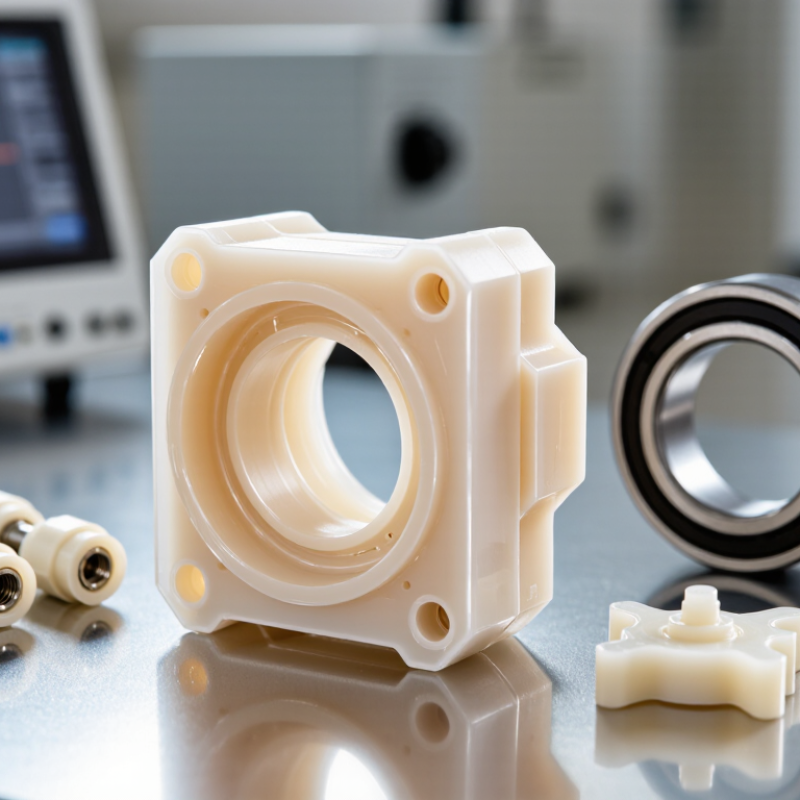
Mechanically, PEEK offers high strength, stiffness, and fatigue resistance while weighing less than many metals. It can handle repeated movement in gears, clips, and bearing parts, though wear depends on mating surfaces, lubrication, and finish. Physically, it absorbs relatively little moisture and resists many chemicals. It also provides electrical insulation and dimensional stability. Still, it is not invulnerable; strong oxidizing agents or poor design choices can undermine performance.

Tips: Test the specific grade under expected temperatures, loads, and cleaning conditions. A small sample can reveal swelling, discoloration, or friction changes before a full part is made. Check machined edges, too. They can hide stress. PEEK is capable, but sometimes over-specified; compare its service life and processing cost with materials that may already meet the need.

What Is PEEK and What Are Its Key Characteristics? — PEEK’s Key Thermal, Mechanical, and Physical Characteristics
Category Characteristic Typical Value Notes
Thermal Glass transition temperature Approximately 143°C (289°F) The temperature at which the amorphous regions of the polymer become more mobile.
Thermal Melting temperature Approximately 343°C (649°F) A characteristic melting point of this semi-crystalline thermoplastic.
Thermal Long-term service temperature Up to about 250°C (482°F) A general reference value; actual performance depends on load, environment, and part design.
Thermal Thermal conductivity Approximately 0.25 W/(m·K) Typical for unfilled PEEK near room temperature; test method and grade affect results.
Mechanical Tensile strength at yield Typically 90–100 MPa Representative range for unfilled, molded material at room temperature.
Mechanical Tensile modulus Typically 3.6–4.0 GPa Indicates stiffness; reinforcement and processing can substantially change this value.
Mechanical Elongation at break Often about 20–50% Varies with molding conditions, specimen geometry, and test procedure.
Mechanical Flexural strength Typically 140–170 MPa Representative range for unfilled material under standard laboratory testing.
Physical Density Approximately 1.30 g/cm³ Typical value for unfilled PEEK; fillers increase density in many formulations.
Physical Water absorption About 0.1% after 24 hours Approximate room-temperature value; immersion conditions and test standards matter.
Physical Linear thermal expansion coefficient Approximately 45–50 × 10⁻⁶ /K Typical unfilled-material range; expansion can vary with temperature and processing direction.

Values are indicative typical ranges for unfilled PEEK and are not design guarantees. Consult grade-specific data and relevant test standards for engineering decisions.

Its Chemical Resistance, Biocompatibility, and Processing Behavior

PEEK resists many oils, fuels, solvents, and weak acids and bases, making it useful around moving parts and chemical lines. It is not universally inert: concentrated sulfuric acid can attack the polymer. A wet chemical splash may leave no visible mark, yet prolonged exposure can still change performance. Check the exact chemical, temperature, and exposure time before specifying it.

Biocompatibility depends on the finished device, not the resin name alone. ASTM F2026-23 specifies PEEK polymers for surgical implant applications, while ISO 10993-1:2018 calls for biological evaluation based on the device’s contact and intended use. Not automatic. Surface finish, additives, sterilization, and wear debris all matter. That distinction is easy to overlook.

Processing needs disciplined heat control. Typical polymer data sheets and CAMPUS material data report a glass-transition temperature near 143°C and a melting point near 343°C. PEEK is commonly melt-processed above its melting point; stable barrel temperatures and dry, clean feedstock help reduce defects. Cooling affects crystallinity, shrinkage, and final dimensions, so thick sections may distort if temperature falls unevenly. Watch the edges. A neat molded surface does not prove the part has uniform internal structure.

Where PEEK Is Used and What Guides Material Selection

PEEK is chosen where heat, chemicals, and repeated mechanical loads challenge ordinary plastics. Typical uses include pump components, electrical connectors, aerospace clips, and medical implants. Grand View Research estimated the global PEEK market at about US$721 million in 2023; its report links demand to aerospace, automotive, and healthcare applications. Market estimates vary with the categories counted, so treat that figure as context, not a purchasing forecast.

Selection should begin with the actual service conditions: operating temperature, chemical exposure, load, wear, and required service life. A high-temperature rating alone is a weak reason to choose it. Check the specific grade, reinforcement, machining needs, and sterilization method. ASTM F2026 covers PEEK polymers for surgical implant applications, but it does not replace device-specific biological evaluation. For industrial parts, confirm tolerances and chemical compatibility using representative operating conditions.

Tip: Test a sample under real heat, load, and cleaning cycles. The result may differ from a datasheet.