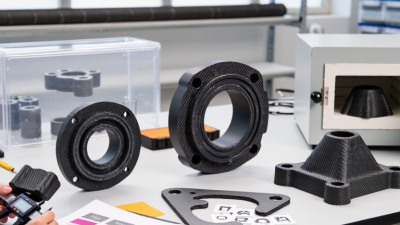
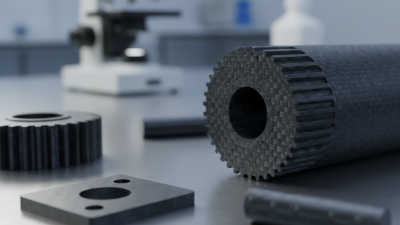
Carbon reinforced PEEK combines a high-performance thermoplastic with carbon fibers to improve stiffness, strength, and wear behavior. Engineers consider it for demanding components such as pump parts, precision fixtures, and lightweight structural pieces. The right grade still depends on load, temperature, processing method, and the finished part’s design. No material solves every problem.
Grand View Research’s PEEK market report estimates the global PEEK market reached USD 761.3 million in 2023 and projects a 7.1% compound annual growth rate from 2024 to 2030. This figure covers PEEK overall, not carbon-fiber-reinforced grades alone. That distinction matters when judging market demand. This guide examines ten China-based manufacturers and compares practical evidence: product specifications, stated fiber content, processing guidance, quality certifications, and access to technical support. A datasheet can look convincing, yet tell little about consistency between batches. Buyers should verify claims directly and request relevant test documentation. The comparison is not perfectly neat, because manufacturers may use different grade names and publish different levels of detail. Treat the list as a starting point, not a definitive ranking.
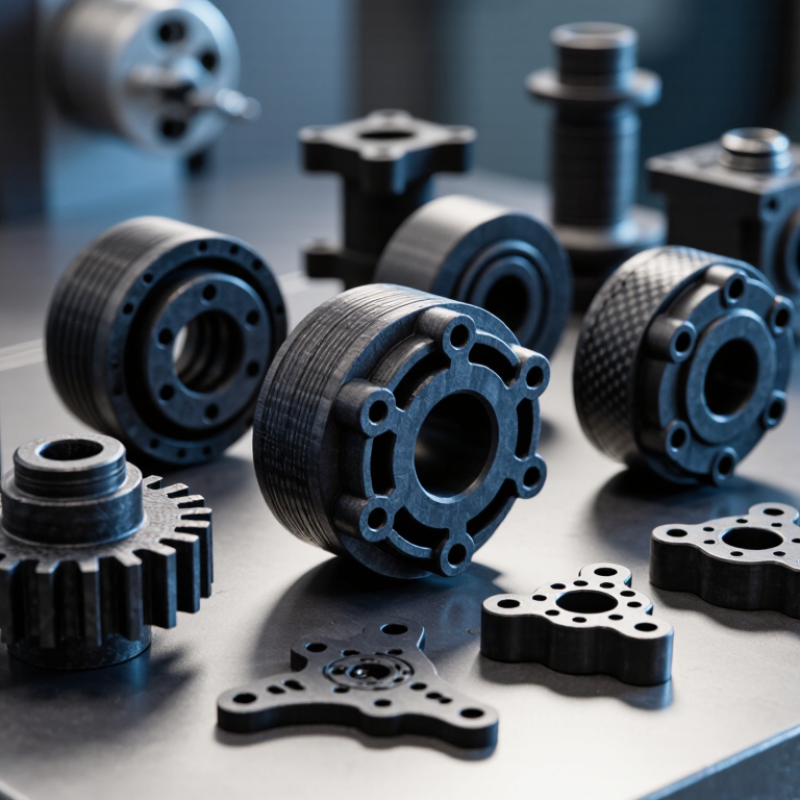
Carbon-reinforced PEEK combines a high-performance thermoplastic matrix with carbon fibers. The PEEK binds the material together; the fibers help increase stiffness and load-bearing capacity. Fiber length, orientation, and percentage vary between grades, so “carbon-reinforced” does not describe one universal recipe. Small details matter.
Compared with unfilled PEEK, reinforced grades often show lower thermal expansion and improved resistance to wear under suitable conditions. They can retain useful stiffness at elevated temperatures, but actual limits depend on the grade, load, and exposure time. A machined bearing, for example, may benefit from reduced deformation, while a thin clip may become less forgiving. Carbon fibers can also make properties directional, especially when fibers align during molding. Not every direction performs equally well.
PEEK generally offers strong chemical resistance, though the fiber interface and specific environment still deserve attention. Designers should check grade-specific data and test parts under realistic temperature, load, and wear conditions. One easy mistake is treating a datasheet value as a guarantee in every shape. Even careful comparisons can leave uncertainty; processing and part geometry matter, too.
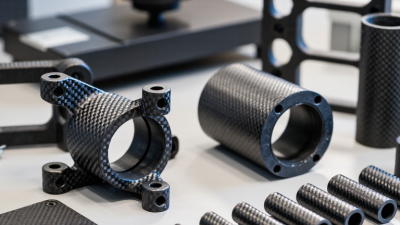
China’s carbon-reinforced PEEK manufacturing landscape spans polymer compounding, semi-finished stock production, and precision machining. Suppliers can differ in fiber content, feedstock control, and how consistently they document each batch. A “top ten” list may be useful, but it cannot replace checking the actual grade and process.
Carbon fiber can improve stiffness and dimensional stability, yet performance depends on more than the percentage printed on a data sheet. Fiber orientation, dispersion, and molding conditions affect strength in different directions. Small details matter. Buyers should ask for traceable material records, test methods, tolerances, and sample parts made with the intended process. For machined components, inspect edges and holes for fiber pull-out or surface damage.
China’s production base offers compounding and fabrication capabilities, but expertise varies between facilities. A supplier experienced with test coupons may not have proven control over a complex finished component. It is not simple. Compare equivalent grades, confirm temperature and chemical exposure requirements, and review independent test results where available. Public company descriptions rarely reveal day-to-day process stability. A careful assessment should include technical discussion and a small production trial, not price alone.
Evaluating carbon-reinforced PEEK manufacturers requires more than comparing quoted prices or advertised strength. Ask for traceable data on resin grade, carbon-fiber content, and batch controls. Request evidence. A dependable supplier should explain how molding conditions affect fiber orientation, shrinkage, and part-to-part consistency. These details matter in a machined bearing or a thin-walled component, where small dimensional changes can alter fit.
Review test methods and actual results, including tensile or flexural properties, heat performance, and wear data when relevant. Check whether testing reflects your intended temperature, load, and environment; a generic datasheet may not. Small details matter. Ask how samples are inspected, how defects are handled, and whether production records can be linked to each lot. Site audits and customer references can add useful context, though they do not replace independent testing. The highest carbon content is not automatically the best choice: stiffness may rise while impact resistance or machining behavior changes. A manufacturer’s answers should be specific, but some uncertainty is reasonable. Application testing is still needed.
Use these criteria to compare candidate manufacturers. The weights are a suggested screening framework, not measured ratings or rankings of specific companies. Test methods should be selected to match the material form and application.
| Evaluation criterion | Suggested weight | Evidence to request | Useful verification approach |
|---|---|---|---|
| Material identity and carbon-fiber specification | 15% | PEEK grade, carbon-fiber type, fiber content, and whether the reinforcement is chopped, milled, or continuous. | Check the technical data sheet and batch certificate; confirm that fiber content is reported on a clearly stated mass or volume basis. |
| Mechanical-property data and test traceability | 15% | Tensile, flexural, and, where relevant, compressive properties, with specimen direction, conditioning, and test temperature stated. | Request full test reports. ASTM D638 or ISO 527 may be relevant to plastic specimens; ASTM D3039 may be relevant to polymer-matrix composite laminates. Confirm method suitability for the supplied form. |
| Thermal performance and dimensional stability | 12% | Thermal transition or heat-deflection data, applicable service-temperature limits, and dimensional-change information for the intended use. | Review the stated test method and conditioning. Compare results only when specimen geometry, method, and test conditions are comparable. |
| Wear and friction characterization | 10% | Wear and friction results relevant to the proposed counterface, load, speed, temperature, and lubrication conditions. | ASTM G99 is one possible pin-on-disk method. Treat results as condition-specific rather than universal material rankings. |
| Consistency between production batches | 12% | Batch identification, inspection records, acceptance limits, and historical variation for key properties. | Compare certificates from multiple lots and verify that the reported properties and test conditions are consistent. |
| Manufacturing and processing capability | 10% | Available forms and processes, process controls, lot traceability, and demonstrated ability to meet the required dimensions and tolerances. | Review process-flow documentation and sample inspection reports; assess production samples against the drawing and agreed acceptance criteria. |
| Quality-management system | 8% | Current quality-system certificate, its scope, the issuing certification body, and documented corrective-action procedures. | Verify certificate status and scope with the certification body or accreditation records. ISO 9001 is a quality-management-system standard, not a product-performance certification. |
| Application-specific compliance and documentation | 7% | Declarations or test documents required for the intended industry, market, and application; material composition and safety information where applicable. | Check each document’s scope, issuing party, revision, and applicability to the exact grade and product form being purchased. |
| Technical support and change control | 6% | Named technical contact, response process, product-change notification, and support for processing or qualification questions. | Confirm support responsibilities and change-notification terms in writing before qualification or production approval. |
| Supply continuity and delivery capability | 5% | Quoted lead time, minimum order quantity, stated capacity, packaging and storage instructions, and contingency arrangements. | Review recent delivery performance and confirm capacity and lead-time assumptions against the required order schedule. |
| Total suggested weight | 100% | Set application-specific pass/fail requirements before comparing suppliers. | |
China’s carbon-reinforced PEEK manufacturers serve demanding applications where low weight, stiffness, and heat resistance matter. These ten profiles focus on practical differences: material development, molding or machining capacity, quality controls, and technical support. A datasheet can show fiber content and tensile strength. It cannot always show how consistently a part performs across production batches.
Some manufacturers emphasize custom compounds, while others focus on molded components or precision-machined stock shapes. Their experience with fiber dispersion and processing temperatures can affect surface finish, dimensional stability, and tool wear. Ask for current test data, not only a general product brochure. Details matter. Public information is uneven, so comparisons should be treated as a starting point rather than a definitive ranking.
For buyers, useful questions include whether a supplier can provide batch traceability, application-specific samples, and clear processing guidance. Check test methods before comparing reported values; different methods can produce different results. Not every time. A promising profile still needs verification against the actual operating conditions, including load, temperature, and exposure to chemicals. That step is easy to overlook.
Carbon-reinforced PEEK combines a high-performance polymer with carbon fibers to improve stiffness and reduce wear. In China, manufacturers serve demanding sectors such as aerospace, medical equipment, electronics, and industrial machinery. Typical parts include lightweight brackets, gears, seals, and sliding components. Each application needs its own grade and design review.
Quality depends on more than a datasheet. Buyers should check fiber content, dimensional tolerance, batch traceability, and test results for strength and wear. ISO 9001 certification can indicate a structured quality system, but it does not prove that every component meets its performance needs. Ask how samples are tested and how production changes are controlled. Small details matter.
Market development is moving toward tighter process control, customized compounds, and more consistent supply. Manufacturers are also working to balance strength, machinability, and cost. There is no perfect grade. A stiffer material may be harder to machine, and published values may not match real operating conditions. That deserves attention. Compare test methods, part geometry, and service temperatures before choosing a supplier. Good engineering starts with specific requirements, not a ranking alone.