Huntersville, NC: (704) 992-8100     Putnam, CT: (860) 928-7911

Why PEEK CF30 Material Properties Matter to Global Buyers?

Global buyers need more than a resin name when evaluating high-performance engineering plastics. The phrase peek cf30 material properties covers strength, stiffness, heat resistance, chemical stability, dimensional control, and processing behavior. These factors influence whether a component survives repeated loads, hot fluid exposure, or tight machining tolerances. A pump seal, bearing cage, or electrical insulator may perform very differently under real operating conditions.

PEEK reinforced with 30% carbon fiber can offer higher rigidity and lower thermal expansion than unfilled PEEK. However, values depend on fiber orientation, molding conditions, specimen geometry, and testing methods. Datasheets often show impressive numbers. They do not always predict field performance. That uncertainty matters. Experienced buyers should compare tensile strength, flexural modulus, wear behavior, friction, density, and continuous-use temperature across consistent standards.

Reliable sourcing also requires documented batch control, technical support, and clear compliance information. Suppliers should explain whether data follows ASTM, ISO, or another recognized method. They should provide processing guidance for injection molding, machining, and post-treatment. A qualified material engineer can also review moisture exposure, mating surfaces, load cycles, and safety factors. Small details matter. A dimensional change of a few hundredths of a millimeter can affect a precision seal. Global purchasing teams should therefore treat peek cf30 material properties as design evidence, not marketing language. Even careful evaluations may miss application-specific risks, so prototype testing remains essential before large-scale production.
Why PEEK CF30 Material Properties Matter to Global Buyers?

What Is PEEK CF30 and How Is It Made?

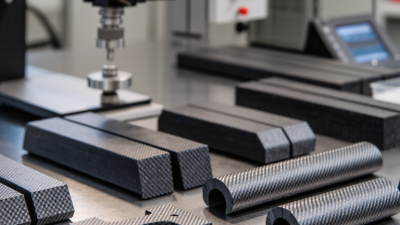
PEEK CF30 is a high-performance thermoplastic reinforced with about 30% carbon fiber by weight. PEEK provides heat resistance, chemical stability, and low moisture absorption. Carbon fibers add stiffness, strength, and improved dimensional control. The material often appears black, with a firm, slightly textured surface after molding.

Production begins with carefully dried PEEK resin and chopped carbon fibers. Manufacturers blend them under controlled heat inside a compounding extruder. Rotating screws distribute the fibers through the molten polymer. The compound is then cooled and cut into uniform pellets. Moisture control matters. Even small amounts of water can damage processing quality at high temperatures.

Molders feed these pellets into injection or compression equipment. Processing temperatures must remain high and stable, while excessive shear may shorten the fibers. Fiber direction can change across a part, especially near gates, ribs, or thin walls. That affects strength and shrinkage. The label “CF30” sounds exact, but it does not describe every performance detail. Fiber length, orientation, resin grade, and molding conditions still matter. I would request a technical data sheet and processing history before comparing suppliers. Laboratory values can look excellent, yet a poorly designed mold may produce weak corners or visible flow lines. Small details matter.

Key Mechanical, Thermal, Chemical, and Electrical Properties

Why PEEK CF30 Material Properties Matter to Global Buyers?

PEEK CF30 contains approximately 30% carbon fiber by weight. This reinforcement can raise tensile modulus to roughly 18–24 GPa. Typical tensile strength may reach 150–200 MPa under ISO 527 testing. Actual results depend on molding direction, specimen geometry, and conditioning. Do not treat one datasheet as a universal guarantee.

Its thermal profile supports demanding applications. PEEK generally shows a glass-transition temperature near 143°C and a melting temperature close to 343°C. ISO 75 and ASTM D648 testing often reports heat-deflection temperatures above 280°C for reinforced grades. Carbon fiber also reduces creep and dimensional movement. However, long exposure to heat can still reduce strength. That detail is easy to underestimate.

Chemical resistance remains a major purchasing factor. PEEK CF30 commonly tolerates oils, fuels, solvents, and many process chemicals. Strong acids, concentrated bases, and high-temperature hydrolysis require separate testing. Carbon fiber changes electrical behavior as well. Industry material databases and ASTM D257 test reports commonly place carbon-fiber-filled PEEK in a dissipative or semi-conductive range, often below 10⁸ ohm-centimeters. It may therefore help control static charge, but it should not be specified as an insulating material without measured data. Global buyers should request ISO or ASTM test conditions, because humidity, fiber orientation, and surface finish can alter results. Small differences matter.

Why PEEK CF30 Material Properties Matter to Global Buyers

PEEK CF30 combines high mechanical strength, excellent thermal stability, low moisture uptake, and strong electrical insulation performance. The chart presents representative engineering values commonly specified for 30% carbon-fiber-reinforced PEEK. Values may vary with grade, fiber orientation, processing conditions, and test method.

Reference test methods commonly used for these properties include ISO 527 or ASTM D638 for tensile properties, ISO 75 or ASTM D648 for heat-deflection temperature, ASTM D149 for dielectric strength, and ISO 62 or ASTM D570 for water absorption.

How Carbon Fiber Reinforcement Changes PEEK Performance

Why PEEK CF30 Material Properties Matter to Global Buyers?

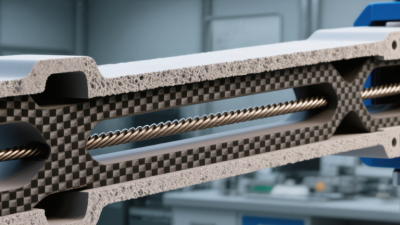
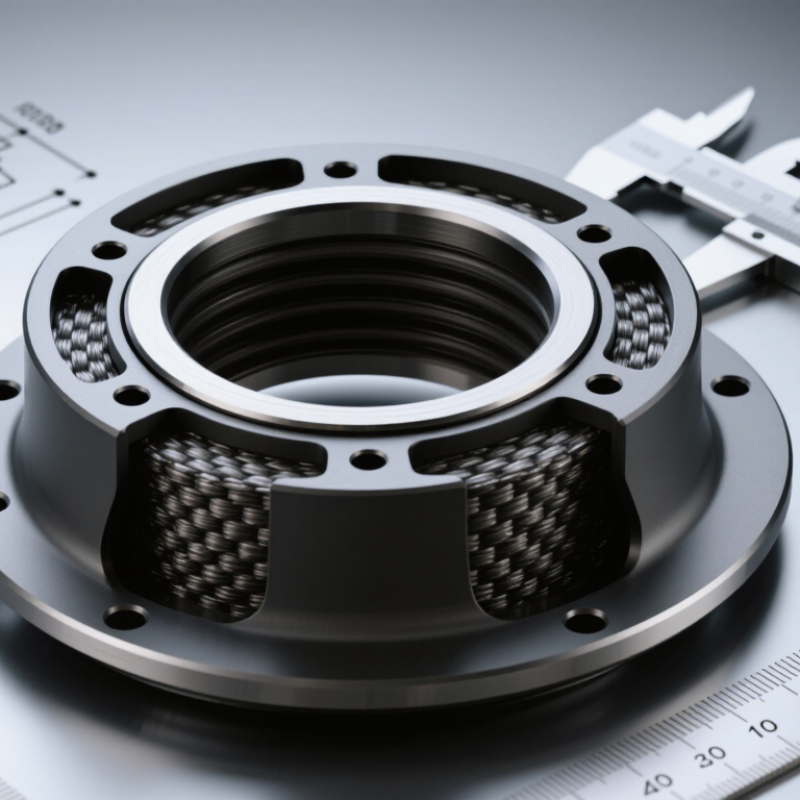
Carbon fiber reinforcement can turn PEEK into a stiffer, more dimensionally stable engineering material. In CF30 grades, the fibers usually occupy about 30% of the compound by weight. They reduce creep under continuous loads, which matters in seals, electrical supports, and precision structural parts. The change is practical. A thin bracket may resist bending better during repeated thermal cycles.

It is not magic. Carbon fibers also create directional behavior. Parts often perform best along the flow direction, while transverse strength may be lower. Injection molding settings, fiber orientation, and cooling conditions can therefore change the final result. I have seen designs pass a datasheet review but distort after machining. That gap deserves attention. Designers should examine warpage, surface finish, and dimensional tolerance, not stiffness alone.

Global buyers should request test data linked to actual processing conditions. Useful checks include tensile strength, flexural modulus, creep, thermal expansion, and chemical exposure. Moisture absorption is relatively low, but storage and handling still affect consistency. CF30 PEEK can improve wear performance, although the mating material and pressure determine the real outcome. It may also increase tool wear during machining. That cost is easy to overlook. A reliable specification should identify fiber content, test method, temperature, orientation, and batch controls. Without those details, comparison becomes uncertain.

Global Standards, Quality Factors, and Supplier Considerations

PEEK CF30 usually contains about 30% carbon fiber, but its performance is not uniform worldwide. Published technical datasets commonly show tensile strength near 170–220 MPa and tensile modulus near 18–22 GPa. Density often remains around 1.45–1.55 g/cm³. These values depend on molding direction, fiber length, and conditioning. ISO 527 and ISO 178 provide useful testing frameworks, yet identical standards do not guarantee identical results. A neat number can still mislead.

Global buyers should request test reports linked to ISO 527, ISO 178, ISO 62, and ASTM D3418. These standards help verify tensile behavior, flexural strength, moisture uptake, and melting transitions. The CAMPUS Plastics Database and published Polymer Testing studies show why processing history matters. Annealing, drying, and injection speed can change dimensional stability. For tight-tolerance parts, buyers should compare warpage data after thermal cycling, not only room-temperature strength. That detail is often missing.

Supplier evaluation needs more than a certificate. Ask for batch traceability, carbon-fiber content verification, lot-level COA records, and retention samples. Verify RoHS and REACH declarations where applicable. A reliable supplier should explain test conditioning, specimen orientation, and statistical variation. ISO 2859-1 sampling plans can support incoming inspection, but they cannot replace process audits. Some reports present average values only. That is a weakness. Buyers should request minimum values, standard deviations, and five-lot production evidence before approving a global source.

How Buyers Evaluate PEEK CF30 for Different Applications

Global buyers evaluate PEEK CF30 by application, not by a single headline property. The “30” usually indicates nominal carbon-fiber content, but formulations can differ. Public CAMPUS data and ISO 527 test records commonly show tensile moduli near 18 GPa and tensile strengths around 150–200 MPa. These figures are useful benchmarks, not guarantees. Processing direction, specimen geometry, and test temperature can change results.

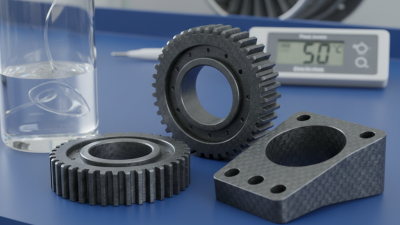
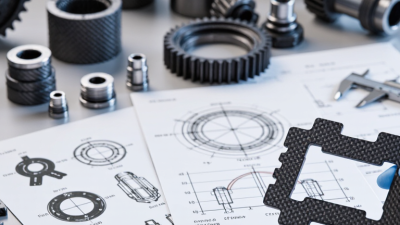
For precision gears, bearings, and pump components, buyers examine stiffness, creep, friction, and wear together. A high modulus can reduce shaft deflection, while carbon fiber may increase counterface abrasion. ASTM D1894 friction data and ASTM G99 wear testing help compare candidate grades. For electrical or semiconductor equipment, dimensional stability and low particle generation may matter more than maximum strength. Buyers also check thermal expansion, moisture conditioning, and outgassing results. Small details matter.

For aerospace or high-temperature assemblies, qualification usually includes continuous exposure, vibration, chemical contact, and repeated thermal cycling. Industry material reviews published in Polymer Testing during 2024 emphasize property retention, rather than room-temperature strength alone. That is a practical warning. Some published values look impressive because they use dry, unaged specimens. Real parts may perform differently after machining or prolonged loading. My own evaluation would require molded-part data, batch traceability, and application-specific testing under ISO 527, ISO 62, and ASTM D2990 methods. A datasheet starts the discussion. It does not finish it.