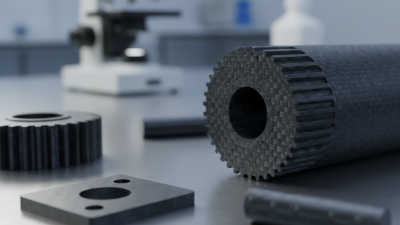
2026 Top Carbon Reinforced PEEK Grades for Global Buyers
For global buyers, selecting a carbon reinforced peek grade is not just a search for the highest strength figure. Carbon-fiber content, fiber length, processing method, and part geometry can all affect performance. A grade that works well in a machined bearing may not suit a thin-walled molded component. Small differences matter.
This guide examines leading grade options available to buyers in 2026, with attention to practical selection factors rather than rankings alone. It considers stiffness, wear behavior, dimensional stability, operating temperature, and processing requirements. These properties should be checked against current supplier datasheets and, where possible, verified through representative testing. Published values are useful, but they do not guarantee identical results in every part or production line.
Procurement teams should also review batch traceability, technical support, sample availability, and consistency between quoted specifications and delivered material. Ask suppliers how they define fiber content and test key properties. Compare like with like. A lower-cost grade may be suitable for a lightly loaded component, while a more demanding application may require closer validation. Not every grade fits.
The comparison has limits. Supplier data may use different test methods, and product availability can change by region. Treat this overview as a starting point, not a substitute for engineering review. A careful trial can reveal details a specification sheet misses. That step takes time, but it can prevent a costly mismatch.
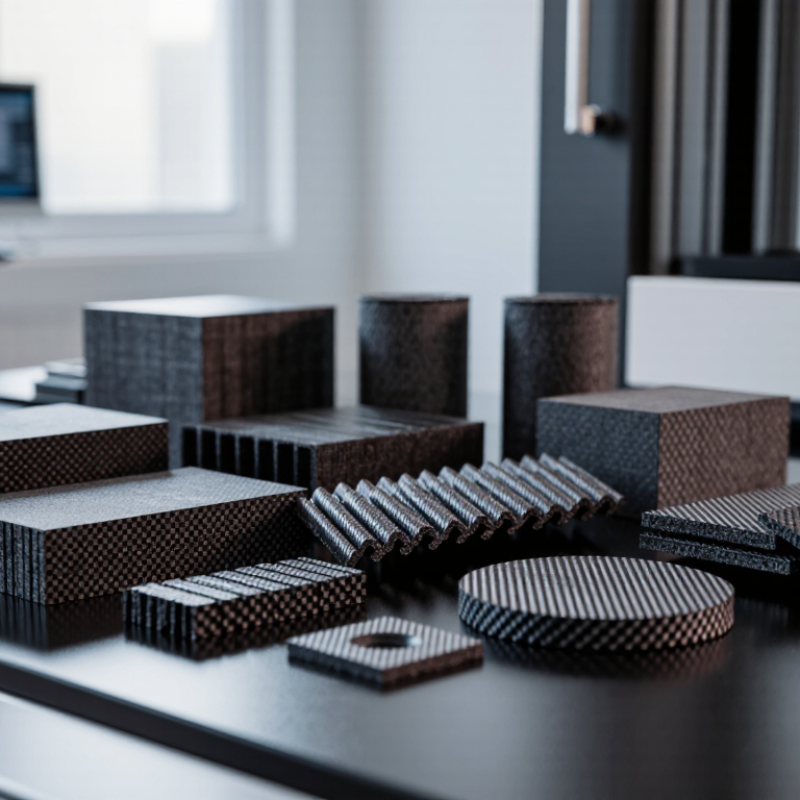
Carbon-Reinforced PEEK Grade Types: Common 30 wt% Fiber Loading
Material composition & properties
Thirty-weight-percent carbon fiber is a common reinforcement level in injection-molded PEEK grades. The percentage describes fiber by mass, not volume; using typical fiber and resin densities, it represents roughly 24% by volume. That distinction matters. CAMPUS material-database records for commercial carbon-fiber PEEK compounds commonly show tensile moduli around 20–24 GPa, tensile strengths near 200–240 MPa, and densities around 1.40–1.45 g/cm³. These are indicative ranges, not guarantees. Compare figures only when test methods and specimen orientation match; ISO 527 tensile testing is commonly used for plastics.
Molding, orientation & limitations
Most 30 wt% grades contain chopped fibers, unlike continuous-fiber laminates. In a molded bracket, fibers tend to follow the melt flow, so stiffness can differ between directions. A narrow rib may feel rigid along its length yet remain less resistant across it. That is easy to overlook. Fiber content can also increase tool wear during machining, while poor processing may reduce fiber length and performance. Published data helps screen candidates, but it cannot replace testing the actual molded part.
One limitation deserves attention: a datasheet’s headline strength may not describe a thin wall, a drilled hole, or a hot, repeatedly loaded component.
Typical CF-PEEK Strength: Tensile Modulus of 18–25 GPa
2026 Top Carbon Reinforced PEEK Grades for Global Buyers
Typical CF-PEEK tensile modulus ranges from 18 to 25 GPa, according to values reported in compound technical datasheets and polymer entries indexed by the CAMPUS database. The range describes stiffness, not tensile strength. ISO 527 specifies a common tensile-test method, but results still depend on specimen preparation, fiber content, and test conditions. That distinction matters.
In a component, higher modulus can reduce flex under load, such as in a thin bracket beside a motor. Yet a single figure cannot predict performance in every direction. Short fibers usually create less directional variation than continuous fibers, while molding flow can still align them unevenly. A datasheet number may look precise. The part may behave differently.
For global buyers, compare grades using the same test method and similar fiber loading. Check whether the reported value is measured along or across the molding direction, and ask for the underlying test conditions. Temperature also matters: PEEK retains useful mechanical properties at elevated temperatures, but stiffness and strength can still change. An 18–25 GPa modulus is a useful screening range, not a guaranteed design value. Testing the finished geometry remains worthwhile.
2026 Top Carbon Reinforced PEEK Grades for Global Buyers — Typical CF-PEEK Strength: Tensile Modulus of 18–25 GPa
| Typical Grade Category |
Carbon Fiber Content
(% by weight) |
Tensile Modulus
(GPa) |
Tensile Strength
(MPa) |
Typical Density
(g/cm³) |
Selection Considerations |
| Low-reinforcement CF-PEEK |
Approximately 10% |
8–12 |
120–160 |
1.33–1.38 |
Balances increased stiffness with relatively good toughness; suitable where moderate reinforcement is preferred. |
| Medium-reinforcement CF-PEEK |
Approximately 20% |
13–18 |
150–200 |
1.36–1.42 |
Offers an intermediate stiffness-to-weight option for structural parts and demanding industrial components. |
| Standard high-reinforcement CF-PEEK |
Approximately 30% |
18–25 |
180–240 |
1.40–1.46 |
A widely used reinforcement level for stiff, lightweight components; the stated modulus range matches typical CF-PEEK data. |
| Very high-reinforcement CF-PEEK |
Approximately 40% |
22–30 |
180–250 |
1.44–1.51 |
Can provide higher stiffness, but increased fiber content may affect impact behavior, surface finish, and mold filling. |
Data note: These are indicative ranges for carbon-fiber-reinforced PEEK compounds, not guaranteed specifications. Results vary with fiber type, formulation, molding conditions, specimen geometry, and fiber orientation. Tensile properties are commonly evaluated using ISO 527; compare supplier data measured under equivalent conditions before material selection.
Thermal Performance: 343°C Melting Point and 260°C Continuous Use
Carbon-reinforced PEEK grades are often specified with a melting point near 343°C and a continuous-use temperature around 260°C. These figures describe different limits. The melting point marks a transition measured by differential scanning calorimetry, while continuous-use ratings concern prolonged exposure under defined conditions. ISO 11357-3:2018 sets out how melting temperatures are measured; it does not guarantee a particular grade will reach a specific service life.
The distinction matters on a hot production line. A component may tolerate brief temperature excursions yet lose stiffness or strength during long exposure under load. ISO 2578 provides a method for assessing time-temperature limits after prolonged heat exposure. For design decisions, engineers should check the grade’s test conditions, including stress, atmosphere, and exposure duration. Carbon fibers can improve stiffness and reduce thermal expansion, but they do not make every component safe at 260°C.
Check the actual data. A datasheet value is not a design allowance. In practice, a machined bracket beside a heater may also face vibration, hot spots, and repeated thermal cycling. Those details are easy to underestimate. The 343°C figure is not a processing target for a finished part, and the 260°C rating is not a universal guarantee. Verify performance with representative testing; the gap between published ratings and real service conditions deserves scrutiny.
Global Grade Comparison: Fiber Content, ASTM Test Data, and Product Form
Carbon-reinforced PEEK grades are often compared by carbon-fiber content, commonly around 10%, 20%, or 30% by weight. These labels are not universal, so check each technical data sheet. A 10% grade may retain more toughness and machine more easily. Higher fiber loading can improve stiffness and reduce dimensional change under load. It can also increase tool wear. A small difference matters.
ASTM test results help buyers compare like with like. Tensile strength and modulus are commonly measured under ASTM D638; flexural properties under ASTM D790. Impact testing may use ASTM D256. Compare specimens with the same dimensions, conditioning, test temperature, and molding direction. Fiber alignment can make one direction much stronger than another. Published values are not interchangeable.
Product form affects the decision too. Pellets suit injection molding, while plates and rods are often machined into seals, bushings, or electrical fixtures. Ask whether a reported value comes from molded or machined stock. For a global grade comparison, record fiber percentage, test method, specimen direction, and units in one table. It is tempting to rank grades by a single strength figure. That can mislead. Real parts face heat, friction, and geometry that a standard coupon cannot fully represent.
2026 Top Carbon Reinforced PEEK Grades for Global Buyers
Global Grade Comparison: Fiber Content, ASTM Test Data, and Product Form
Representative 30 wt% carbon-fiber PEEK values are shown: tensile strength is approximately 210 MPa (ASTM D638), tensile modulus approximately 24 GPa (ASTM D638), and flexural modulus approximately 20 GPa (ASTM D790). These are indicative published-data values, not guaranteed limits; results vary with grade, specimen preparation, and processing. Common supply forms include pellets for molding or extrusion, and semi-finished rods and plates.
Buyer Qualification: Verify RoHS Status, Traceability, and Grade-Specific Data Sheets
Carbon-reinforced PEEK grades can differ in carbon content, fiber form, and processing behavior. A shared polymer name does not make two grades interchangeable. Ask for the current RoHS declaration and check that it covers the exact grade, product form, and manufacturing site. Record its issue date. A generic statement is weak evidence.
Traceability should connect each shipment to a production lot. Check that labels, certificates, and purchase documents use matching grade and lot identifiers. Keep a retained sample when qualification risk is high. Small detail, real value. A neat spreadsheet can still hide a mismatch if lot codes are copied incorrectly.
Request a grade-specific data sheet, not a family brochure. Review test methods, conditioning, temperature, and specimen direction before comparing strength or modulus. Carbon reinforcement can affect stiffness, wear, electrical behavior, and machining response. These figures may not predict a finished component exactly. That part is easy to overlook. For critical parts, confirm the supplier’s test basis and evaluate samples under the actual load, temperature, and machining conditions. Qualification is not paperwork alone; it is evidence that the delivered grade matches the intended use.