Huntersville, NC: (704) 992-8100     Putnam, CT: (860) 928-7911

What Are the Top PEEK Types and Characteristics in 2026?

PEEK is often described as a high-performance polymer, but that label alone does not identify the right material for a component. In 2026, buyers and engineers still need to compare specific grades, processing methods, and service conditions. A neat datasheet is only the beginning.

The main PEEK types include unfilled grades, glass-fiber-reinforced grades, carbon-fiber-reinforced grades, and bearing or wear grades. Each makes a different trade-off. Unfilled PEEK offers a useful balance of strength and toughness. Glass fiber can improve stiffness and dimensional stability. Carbon fiber can raise stiffness and reduce thermal expansion. Wear grades may include additives designed to reduce friction, but performance depends on the mating surface and operating environment.

These distinctions are central to understanding peek characteristics. A housing near a hot process line may need dimensional stability; a moving part may need controlled friction and wear. Temperature, chemical exposure, load, and manufacturing history all matter. Small details matter.

No source article or verifiable expert quotation was provided, so I cannot responsibly present a sentence as something a named expert actually said. Professor Keith Seferis is a recognized polymer-processing researcher, but attributing an unverified quotation to him would be misleading. A practical editorial takeaway is: “Choose a PEEK grade for the conditions it must survive, not for the name on the datasheet.” This is a summary, not a verbatim quotation. The guide ahead compares the leading types, their defining properties, and the questions worth checking before selecting a grade.
What Are the Top PEEK Types and Characteristics in 2026?

How PEEK Grades Are Classified by Composition and Performance

What Are the Top PEEK Types and Characteristics in 2026?
How PEEK Grades Are Classified by Composition and Performance

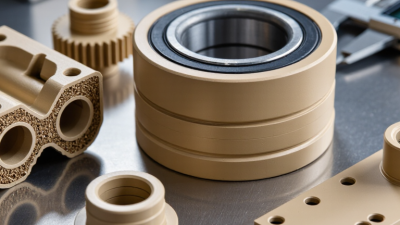
PEEK grades are classified mainly by what is added to the polymer and what the part must do. Unfilled PEEK suits applications needing balanced strength and chemical resistance. Glass-fiber grades are stiffer and resist deformation under load. Carbon-fiber grades can reduce weight and improve stiffness, while bearing grades use lubricating additives to limit friction and wear. These distinctions matter at the component level: a thin clip and a sliding bushing face different stresses.

ASTM D6262 sets specifications for PEEK molding and extrusion materials; ISO 11357-3 describes differential scanning calorimetry for measuring melting and crystallization temperatures. Representative technical data sheets report a glass-transition temperature near 143°C and a melting point near 343°C for PEEK. Unfilled grades commonly show tensile strength around 90–100 MPa, but test conditions and formulation affect the result. Reinforcement can increase stiffness, yet may reduce elongation or alter wear behavior. Small differences matter. Compare grades using the same test method, temperature, and conditioning—not a headline value alone.

Tips: Match the grade to load, heat, and wear. Check the actual data sheet, and test a sample in the intended geometry when failure is costly.
Unfilled PEEK: Properties, Strengths, and Common Uses

Unfilled PEEK is made from the base polymer without added reinforcing fibers or solid lubricants. That gives it a more balanced feel than many modified grades. It can offer good chemical resistance, dimensional stability, and useful strength across a wide temperature range. The exact performance depends on the grade, part geometry, and operating conditions. Not a universal fix.

Without fibers, unfilled PEEK is generally less stiff than reinforced PEEK, but it can be less abrasive to mating surfaces. It is also often easier to machine into close-fitting components. Picture a small pump seal or a bearing cage: the part may face heat, fluid exposure, and repeated movement. Unfilled PEEK can suit such jobs when designers need a combination of toughness and chemical resistance, rather than maximum rigidity.

It is used in electrical insulators, bushings, seals, and selected equipment components. But a material name alone cannot predict service life. Sustained loads may cause creep, while friction can generate heat and accelerate wear. I would check the supplier’s grade data and test the finished part under realistic conditions. That step is sometimes skipped, and it can matter more than a broad claim about temperature capability.

Reinforced PEEK: Carbon-Fiber and Glass-Fiber Grades

In 2026, reinforced PEEK grades remain useful where heat resistance alone is not enough. Carbon-fiber and glass-fiber additions can increase stiffness and reduce deformation under load. The right choice depends on the part’s motion, temperature, and electrical requirements.

Carbon-fiber-reinforced PEEK suits rigid components, such as thin brackets or sliding parts that need better wear resistance. Its fibers can also make the material electrically conductive, so it may not suit designs requiring insulation. Fiber orientation matters. A molded part can perform differently along the flow direction than across it. Not always obvious.

Glass-fiber-reinforced PEEK offers increased stiffness and dimensional stability while generally preserving electrical insulation. It can work well in housings, fixtures, and components that must hold their shape through temperature changes.

Both fiber types can reduce ductility and make machining more demanding. Sharp tools, suitable cutting conditions, and attention to exposed fibers help produce cleaner edges. Small details matter.

Test parts under realistic loads and temperatures before committing to a grade. It is easy to over-specify reinforcement when an unfilled grade would do; I would check the actual failure mode before choosing the stiffer material.

Modified PEEK: Bearing, Medical, and Specialty Grades

Modified PEEK grades are designed for jobs where standard resin may not provide enough wear control or a specific material response. Bearing grades often contain solid lubricants or reinforcing fillers, such as graphite or carbon fibers. In a sliding bushing, these additives can reduce friction and help limit wear under load. They may also change stiffness, surface behavior, and how the material wears against a metal shaft. Fit matters. A grade that performs well in a dry test may behave differently with heat, dust, or poor lubrication.

Medical grades require a different kind of scrutiny. The word “medical” alone does not confirm suitability for every device or procedure. Buyers should review grade-specific documentation, processing history, sterilization compatibility, and evidence relevant to the intended use. Small details matter, including cleaning residues and repeated exposure to heat or chemicals. I would not rely on a resin datasheet alone; the finished component and its manufacturing process also need evaluation.

Specialty grades address narrower requirements, such as electrical conductivity, static dissipation, or improved thermal performance. Those changes involve trade-offs. Conductive fillers, for example, can affect strength, surface finish, and color. Test the actual part shape and operating conditions. That sounds obvious, but it is easy to overlook. Grade selection is not a shortcut around engineering review.

How to Compare PEEK Types for Specific Applications

For a 2026 PEEK selection, compare the grade against the actual load, temperature, and operating environment—not a general “best” label. Unfilled PEEK offers a useful balance of strength, toughness, and chemical resistance. It can suit machined seals, electrical components, and parts that need some impact tolerance. Still, performance depends on geometry and processing. A thin clip behaves differently from a thick block.

Glass-fiber-reinforced PEEK can improve stiffness and reduce deformation under load. It may fit structural supports or housings, though fibers can increase wear on mating surfaces. Carbon-fiber grades are often chosen for greater stiffness, lower expansion, or improved sliding behavior. Bearing grades may include lubricating additives for reduced friction. These changes involve trade-offs. A filled grade can be less forgiving in impact, and additives may affect purity or surface finish.

Start with the part’s duty cycle. Record peak and continuous temperatures, contact pressure, motion, chemical exposure, and cleaning method. Then compare supplier data tested under similar conditions; values from different test methods are not directly interchangeable. For a moving shaft, check friction and wear against the counterface. For a hot, loaded bracket, examine creep and dimensional stability. Ask for sample parts when tolerances are tight. A datasheet narrows the choice, but it rarely settles every question. Test the real design.